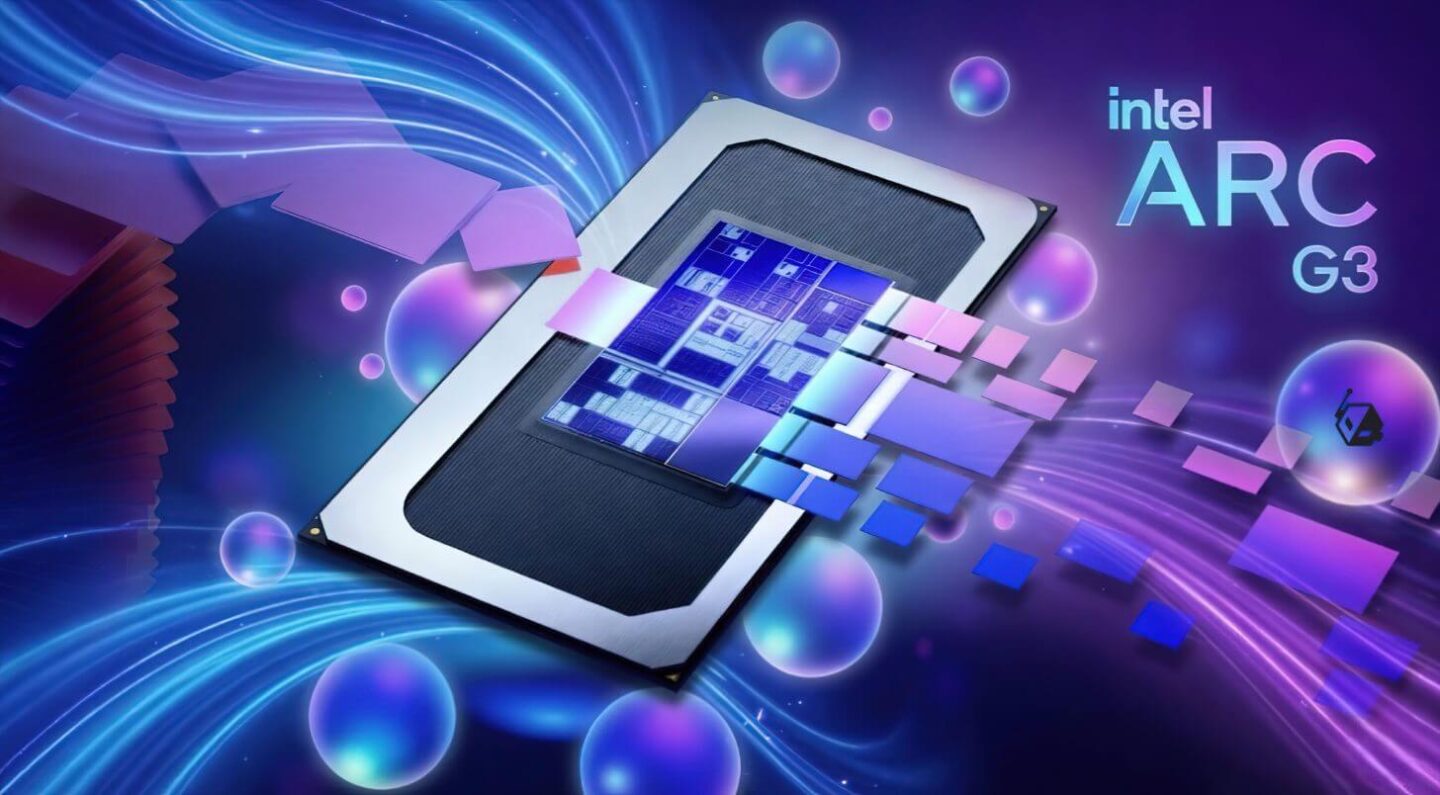
Handheld gaming PCs have experienced explosive growth over recent years. Consequently, AMD has dominated this lucrative market segment almost unchallenged for several generations. However, Intel is officially mounting a massive counteroffensive with its purpose-built silicon. According to the official Intel newsroom release, the semiconductor giant has unveiled its new Intel Arc G3 Extreme processor. This chip features a formidable 14-core architecture designed specifically for portable gaming machines.
Furthermore, this new silicon family represents a massive milestone for mobile gaming hardware. Built on Intel’s 18A process node, the flagship SoC targets high frame rates in demanding triple-A titles. Additionally, it packs 12 Xe3 GPU cores to deliver desktop-class graphics capabilities directly into your palms. In fact, early benchmark leaks on TechPowerUp hardware coverage reveal a staggering 20% CPU advantage over rival chips. Therefore, handheld enthusiasts finally have a true second flagship platform to consider.
In this deep-dive article, we will examine everything you need to know about Intel’s latest silicon. First, we will analyze the technical specifications powering this 14-core powerhouse. Next, we will evaluate graphics efficiency and real-world gaming performance. Finally, we will review the first commercial handheld devices arriving on the market.
Architectural Breakthrough: Inside the 14-Core Engine
Panther Lake Foundations and 18A Manufacturing
To understand this new processor, we must first examine its foundational architecture. Specifically, the Intel Arc G3 Extreme processor relies on the Panther Lake microarchitecture. Intel manufactures this chip using its cutting-edge 18A process node. As a result, the processor achieves remarkable transistor density and electrical efficiency.
Additionally, the chip integrates 14 distinct CPU cores to handle heavy background processing easily. Consequently, modern games can run background tasks without stuttering or dropping frames. Meanwhile, dedicated efficiency cores manage operating system overhead during intensive gaming sessions. This smart resource division keeps key gaming threads running on peak performance cores.
Integrated NPU and Next-Gen Connectivity
Besides raw CPU muscle, Intel integrated a high-performance Neural Processing Unit (NPU) into the die. In fact, the built-in NPU delivers up to 46 TOPS of dedicated AI compute. Therefore, these devices fully qualify as Microsoft Copilot+ handheld PCs out of the box. Consequently, players can utilize real-time AI audio noise cancellation and background features seamlessly.
Furthermore, connectivity options receive a major upgrade across the board. The platform natively supports integrated Wi-Fi 7 R2 along with Bluetooth 6.0 wireless standards. Moreover, dual Thunderbolt 4 controllers provide 40 Gbps bandwidth for external GPUs or rapid storage docks. As a result, gamers can dock their handhelds and transform them into full desktop workstations instantly.
💡 Pro-Tip: When using Thunderbolt 4 docks, make sure your cable supports full 40 Gbps data transfers. Lower-quality charging cables can choke external GPU bandwidth and reduce gaming performance dramatically!
Xe3 Graphics Architecture and XeSS 3 Upscaling
Xe3 Core Performance Improvements
Graphics performance ultimately makes or breaks any mobile gaming handheld. Fortunately, Intel implemented 12 dedicated Xe3 graphics cores inside the Intel Arc G3 Extreme processor. Built on the Arc B390 GPU design, these cores deliver incredible pixel throughput. In addition, upgraded ray tracing units bring lifelike shadows and reflections to handheld screens.
In real-world gaming tests, this new GPU architecture shows dramatic improvements over previous generations. For example, frame rates in demanding titles increase by over 50% on average. Specifically, Cyberpunk 2077 and Hogwarts Legacy see massive performance gains under identical power limits. Furthermore, hardware-level integer scaling ensures classic pixel-art games render crisply without unwanted blur.
The AI Advantage: XeSS 3 Multi-Frame Generation
Beyond raw silicon tweaks, software upscaling plays a critical role in portable gaming. To combat demanding rendering workloads, Intel introduced its revolutionary XeSS 3 technology. Specifically, XeSS 3 combines AI-powered upscaling with advanced multi-frame generation. Consequently, the GPU can generate multiple intermediate frames without overloading the main rendering pipeline.
Moreover, this feature reduces input latency while dramatically smoothing out frame delivery. In fact, enabling XeSS 3 can nearly triple baseline frame outputs in heavy games. As a result, 1080p gaming at 120Hz becomes entirely practical on a handheld device. Thus, gamers no longer need to sacrifice visual clarity just to achieve playable frame rates.
+-----------------------------------------------------------------------+
|                 INTEL XeSS 3 FRAME GENERATION STACK                   |
+-----------------------------------------------------------------------+
| [ Native Frame ] -> [ AI Motion Vectors ] -> [ Generated Frames ]     |
|         |                                           |                 |
|         +------------------> [ XeSS 3 Engine ] <----+                 |
|                                     |                                 |
|                         [ 120Hz Smooth Output ]                       |
+-----------------------------------------------------------------------+
Power Efficiency vs. Peak Performance: The Battery Dilemma
TDP Scaling and Power Delivery
Historically, Intel handheld processors struggled with high power consumption at lower wattages. However, the 18A process node drastically improves energy efficiency across all operating ranges. Specifically, the chip scales smoothly from a quiet 15-watt profile up to a aggressive 35-watt mode. Therefore, users can customize power draw based on their immediate gaming needs.
Additionally, Intel engineered dedicated power management micro-controllers directly into the silicon. Consequently, the chip shuts down unused core blocks during lighter tasks. In contrast to older designs, idle power drain drops significantly. Thus, indie gaming sessions can last up to 5 hours on standard batteries.
| Hardware Parameter | Intel Arc G3 Extreme Specs | AMD Ryzen Z2 Extreme Specs |
| CPU Cores / Threads | 14 Cores / 14 Threads | 8 Cores / 16 Threads |
| GPU Architecture | Xe3 (12 Xe-Cores / Arc B390) | RDNA 3.5 Graphics |
| NPU AI Performance | 46 TOPS | ~50 TOPS |
| Upscaling Tech | Intel XeSS 3 Multi-Frame | AMD FSR 3.1 |
| Memory Support | Up to LPDDR5X-8533 | LPDDR5X-7500 |
| Process Node | Intel 18A Node | TSMC 4nm Node |
⚠️ Warning: Pushing the chip to its maximum 35W TDP limit will drain your battery rapidly! Always limit handheld power profiles to 20W or lower when playing away from wall outlets.
First-Wave Handhelds Powered by Intel Arc G3 Extreme
Acer Predator Atlas 8 and MSI Claw 8 EX AI+
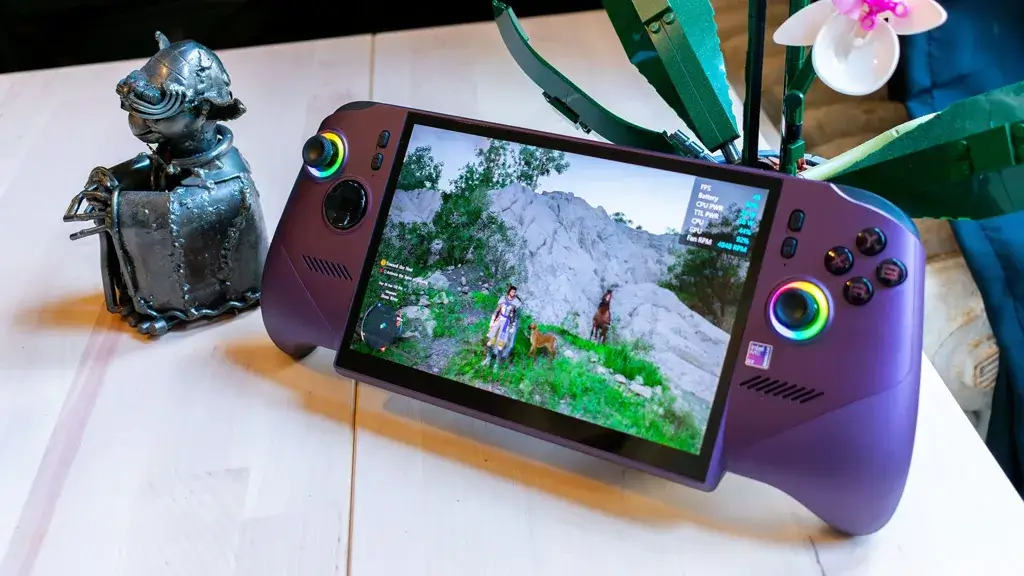
Naturally, hardware partners are eager to showcase this impressive new processor. Leading the charge, the Acer Predator Atlas 8 offers an 8-inch 120Hz display with dual-mode triggers. Additionally, its custom AeroBlade cooling system keeps temperatures manageable under heavy loads. Consequently, performance remains consistent even during long gaming sessions.
Simultaneously, the MSI Claw 8 EX AI+ delivers a premium mobile experience. Featuring a massive 80Wh battery, this device addresses traditional battery anxiety directly. Furthermore, MSI paired the 14-core chip with up to 32GB of ultra-fast LPDDR5X RAM. Therefore, games load faster and stutter far less during texture streaming.
+-----------------------------------------------------------------------+
|                    FLAGSHIP INTEL ARC G3 HANDHELDS                    |
+-----------------------------------------------------------------------+
| Device Model           | Display Specs         | Battery | Highlights |
+------------------------+-----------------------+---------+------------+
| Acer Predator Atlas 8  | 8" FHD+ 120Hz VRR     | 60-80Wh | Dual Mode  |
| MSI Claw 8 EX AI+      | 8" WUXGA 120Hz VRR    | 80Wh    | Hyperflow  |
| OneXPlayer 3           | 8.8" OLED 144Hz VRR   | 85Wh    | 3-in-1 Design|
+-----------------------------------------------------------------------+
The Modular Maverick: OneXPlayer 3
Meanwhile, OneNetbook introduced a truly unique device with the OneXPlayer 3 listing. This versatile 3-in-1 handheld features detachable controllers and a magnetic keyboard. Consequently, users can instantly convert the device from a handheld console into a tablet or mini-laptop.
Furthermore, the device boasts an impressive 8.8-inch 144Hz AMOLED display with 1,100 nits peak brightness. Powered by an 85Wh battery and vapor chamber cooling, it handles high-TDP operation smoothly. However, premium features come at a cost, with configurations starting around $1,399. Nevertheless, it showcases the incredible versatility of Intel’s new platform.
Market Impact: Can Intel Overthrow AMD in Handheld PCs?
Software Driver Maturity and Linux Compatibility
Despite hardware superiority, software driver optimization remains the ultimate battleground. Intel has made gigantic strides in driver stability over the past two years. For instance, day-zero game support now matches competitor timelines reliably. Additionally, precompiled shader distribution drastically reduces in-game compilation stuttering on Windows 11.
However, AMD still holds a major advantage in Linux OS ecosystem integration. Since SteamOS relies heavily on open-source Linux drivers, AMD handhelds enjoy widespread community support. Therefore, Intel must continue refining its Linux drivers to capture non-Windows handheld enthusiasts. Nevertheless, Windows-based handheld gaming is now more competitive than ever.
Pricing Realities and Final Verdict
Without a doubt, these flagship handhelds enter a premium price tier. Most Arc G3 Extreme configurations range from $1,300 to nearly $2,000. Consequently, budget-conscious buyers might find these prices difficult to swallow. However, for gamers wanting desktop-class handheld performance, the technology justifies the investment.
Ultimately, Intel has delivered its most compelling mobile gaming chip to date. By combining 14 CPU cores with 12 Xe3 GPU cores, Intel directly challenges AMD’s longstanding dominance. As more manufacturers adopt this platform, handheld gaming will reach unprecedented heights.
Conclusion & Final Thoughts
To summarize, the Intel Arc G3 Extreme processor marks a dramatic turning point in mobile PC gaming. Intel successfully combined raw computing power, cutting-edge AI upscaling, and robust power management into a single chip. Consequently, handheld PC enthusiasts no longer face a single-option market. As software optimization continues to mature, this 14-core monster will shape the future of portable gaming for years to come.
What do you think about Intel’s new handheld processor? Are you planning to upgrade to an Arc G3 Extreme handheld this year, or will you stick with AMD? Let us know in the comments below! Don’t forget to share this article with your fellow gamers on social media!