The personal computer market stands on the threshold of its biggest transformation in three decades. For years, x86 processors from Intel and AMD dominated the desktop and mobile landscapes. However, traditional processor architectures now face severe power and efficiency barriers. Meanwhile, machine learning software requires massive parallel compute power that standard chips cannot deliver efficiently. Consequently, tech giant NVIDIA has officially entered the client PC market with a groundbreaking solution.
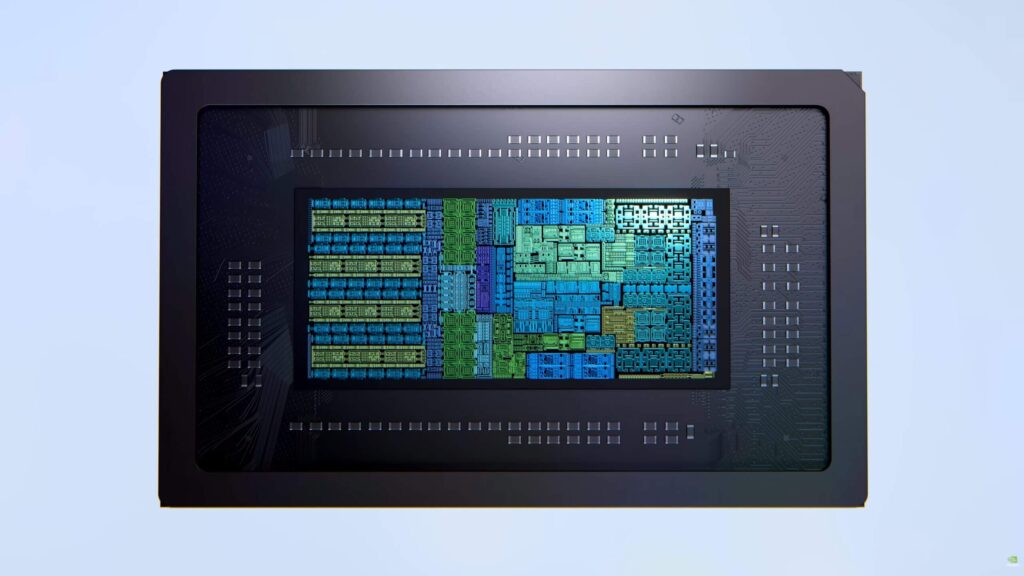
To solve these hardware bottlenecks, NVIDIA unveiled the revolutionary NVIDIA RTX Spark platform. This custom ARM PC processor combines high-performance CPU cores with next-generation GPU hardware. Furthermore, it enables local AI supercomputing directly inside slim, premium laptops without burning battery power. In this technical deep dive, we examine how RTX Spark functions and why x86 dominance is slipping.
+-------------------------------------------------------------------+
|                   NVIDIA RTX SPARK ARCHITECTURE                   |
+-------------------------------------------------------------------+
|  20-Core Grace CPU (10x Cortex-X925 + 10x Cortex-A725)            |
|  NVLink-C2C Interconnect (High-Bandwidth Coherency)               |
|  Blackwell RTX GPU (6,144 CUDA Cores / 5th-Gen Tensor Cores)      |
|  Up to 128 GB Unified LPDDR5X Memory Pool (273 GB/s Bandwidth)    |
+-------------------------------------------------------------------+
Architecture Overview: Merging Grace and Blackwell Cores
At its physical foundation, the RTX Spark system-on-chip represents a masterpiece of silicon engineering. Instead of using off-the-shelf CPU designs, NVIDIA integrated a 20-core Grace CPU cluster directly onto the die. Specifically, this cluster combines ten high-performance ARM Cortex-X925 cores with ten energy-efficient Cortex-A725 cores. As a result, the chip routes background processing smoothly while keeping peak single-thread speed blazing fast.
Additionally, NVIDIA paired these ARM cores with a dedicated Blackwell RTX GPU block. This GPU module packs 6,144 CUDA cores and fifth-generation Tensor Cores built specifically for sparse neural network operations. Furthermore, NVIDIA links the CPU and GPU components using high-speed NVLink-C2C interconnect technology. Therefore, latency drops dramatically compared to traditional PCIe bus arrangements found in standard x86 laptops. You can read full specifications directly on the NVIDIA RTX Spark Official Page.
+-------------------------------------------------------------------+
|                TRADITIONAL PC VS. RTX SPARK MEMORY                |
+-------------------------------------------------------------------+
| TRADITIONAL ARCHITECTURE:                                         |
| [System RAM (32GB)] <--- PCIe Bus Bottleneck ---> [VRAM (8-16GB)] |
|                                                                   |
| RTX SPARK UNIFIED ARCHITECTURE:                                   |
| [================ Combined 128GB Unified Memory Pool ============] |
|   Shared instantly by Grace CPU and Blackwell GPU via NVLink-C2C  |
+-------------------------------------------------------------------+
Unified Memory Architecture: Breaking the VRAM Bottleneck
Historically, mobile creators and developers suffered from strict discrete VRAM capacity limits. Standard laptops force users to allocate distinct pools for system RAM and graphics VRAM. In contrast, RTX Spark utilizes a fully coherent unified memory architecture. Consequently, the Grace CPU and Blackwell GPU share up to 128 GB of high-speed LPDDR5X system memory simultaneously.
Because of this unified pool, the system eliminates duplicate memory transfers across internal channels. Furthermore, software models can load massive datasets directly into shared RAM without crashing graphics pipelines. Indeed, this design mirrors Apple Silicon strategies but adds native CUDA ecosystem support for heavy industrial workflows. To explore hardware details further, check the Nvidia RTX Spark Wikipedia documentation.
💡 Pro-Tip: When selecting an RTX Spark laptop for local AI development, choose the 128 GB configuration. This extra capacity lets you run 120-billion parameter models locally without offloading calculations to remote cloud services.
+-------------------------------------------------------------------+
|               LOCAL AI INFERENCE CAPABILITY MATRIX                |
+-------------------------------------------------------------------+
| Model Size   | RAM Needed | Target Platform | Execution Time      |
+--------------+------------+-----------------+---------------------+
| 7B Params    | 16 GB      | Standard NPU    | Real-time           |
| 32B Params   | 32 GB      | High-end x86    | Moderate Delay      |
| 70B Params   | 64 GB      | RTX Spark 64GB  | Near Real-time      |
| 120B Params  | 128 GB     | RTX Spark 128GB | Instant Local Flow  |
+-------------------------------------------------------------------+
Local AI Performance: Personal Agents on Your Lap
The primary selling point of RTX Spark centers around raw local AI compute capabilities. Modern Cloud-based Large Language Models suffer from noticeable network latency, privacy concerns, and recurring monthly fees. However, the RTX Spark superchip delivers up to one petaflop of FP4 AI processing power locally. Consequently, autonomous personal agents run directly on your laptop frame without internet connectivity.
Furthermore, local execution protects sensitive enterprise code and personal creative assets from cloud exposure. Software developers can fine-tune custom AI models directly within local environments using native CUDA tools. Meanwhile, content creators can generate 4K synthetic video frames instantly without waiting for cloud rendering queues. In fact, this capability transforms mobile laptops into self-contained workstation supercomputers.
⚠️ Warning: Running sustained 1-petaflop FP4 workloads under battery power will drain laptop batteries rapidly. Always connect your device to a 240W power supply when performing continuous AI model training cycles.
Software Ecosystem and Emulation Improvements
Historically, Windows on ARM devices struggled with software compatibility issues and sluggish x86 translation layers. However, Microsoft and NVIDIA collaborated deeply to optimize the Windows 11 kernel specifically for RTX Spark. Specifically, the updated Prism emulation engine translates legacy 64-bit x86 software routines with minimal performance loss.
In addition, software creators are porting their core applications to native ARM binaries rapidly. Industry-standard platforms like DaVinci Resolve, Blender, Adobe Photoshop, and MATLAB now run natively on RTX Spark. Furthermore, developers can leverage official CUDA SDKs natively compiled for ARM platforms. Consequently, software execution feels instantaneous across professional production pipelines. Technical implementation details appear in this comprehensive TechPowerUp RTX Spark SDK Overview.
+-------------------------------------------------------------------+
|                  SOFTWARE ECOSYSTEM MATURITY                      |
+-------------------------------------------------------------------+
| NATIVE ARM64 BUILD AVAILABLE:                                     |
| [X] Adobe Creative Cloud    [X] DaVinci Resolve   [X] Blender 3D  |
| [X] MATLAB Engine           [X] CapCut Pro        [X] Cinema4D    |
|                                                                   |
| RUNS VIA WINDOWS 11 PRISM EMULATION:                              |
| [--->] Legacy x86 Utilities [--->] Older PC Games                 |
+-------------------------------------------------------------------+
Gaming and Creative Workloads Reimagined
Beyond enterprise artificial intelligence, RTX Spark completely reimagines mobile gaming performance. Traditional ARM laptops lacked robust graphics drivers for AAA game titles. In contrast, the Blackwell GPU embedded within RTX Spark includes full ray-tracing hardware and DLSS frame generation technology. Therefore, gamers enjoy photorealistic lighting and smooth frame rates in demanding titles.
Furthermore, major game developers are implementing native ARM anti-cheat systems like BattlEye and Easy Anti-Cheat. Consequently, multiplayer gaming on ARM Windows devices works smoothly out of the box. Meanwhile, 3D artists benefit from instant viewport rendering in Maxon Redshift and Blender Cycles. Early benchmark results were detailed recently in this Notebookcheck Cinebench RTX Spark Leak.
Hardware Partners and Laptop Form Factors
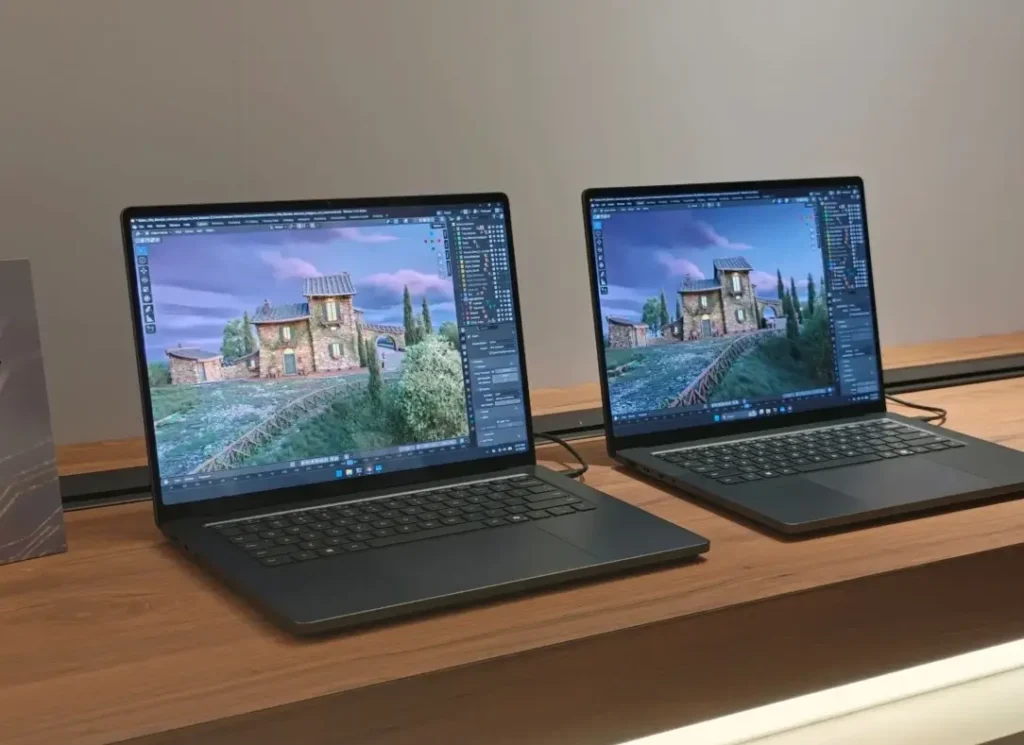
Leading PC manufacturers have embraced the RTX Spark platform across their flagship mobile lineups. For instance, ASUS showcased its ultra-sleek ProArt P16 and P14 creator laptops at Computex. These machines feature 4K OLED touchscreens, 99.9 Wh batteries, and CNC-machined aluminum chassis profiles. Furthermore, Microsoft, Lenovo, and Dell plan to ship RTX Spark devices soon.
| Manufacturer Model | Screen Size / Type | Max RAM Options | Profile Thickness | Battery Capacity |
| ASUS ProArt P16 | 16.0″ 4K OLED | Up to 128 GB Unified | 12.9 mm | 99.9 Wh |
| ASUS ProArt P14 | 14.0″ 2.8K OLED | Up to 64 GB Unified | 13.9 mm | 90.0 Wh |
| Surface Laptop Ultra | 15.0″ PixelSense | Up to 128 GB Unified | 14.1 mm | 92.0 Wh |
| Dell XPS 16 Spark | 16.3″ 4K Touch | Up to 128 GB Unified | 13.5 mm | 95.0 Wh |
Remarkably, these laptops maintain lightweight profiles under two kilograms despite packing workstation-class horsepower. Additionally, thermal efficiency stays remarkably manageable within thin enclosures. Because ARM processors draw far less power under modest loads, battery life stretches through full working days comfortably. Learn more about flagship designs in this ASUS ProArt Computex Coverage.
Final Thoughts: The x86 Monopoly Ends Here
The launch of the NVIDIA RTX Spark platform marks a monumental paradigm shift for personal computers. By marrying ARM efficiency with world-class GPU parallel computing, NVIDIA solved longstanding PC performance bottlenecks. Consequently, x86 chipmakers no longer hold an unbreakable monopoly over high-performance Windows laptops.
Ultimately, consumers and developers win big from this architecture war. Users receive thinner laptops, silent cooling, incredible battery life, and local supercomputing capabilities. As local AI agents become integral parts of daily digital workflows, RTX Spark sets the standard for next-generation hardware. The era of true mobile AI computing has finally arrived.
What Do You Think?
Will your next laptop be an ARM-powered NVIDIA machine, or are you sticking with traditional x86 processors? Let us know your thoughts in the comments section below! If you found this technical analysis useful, please share this article with your fellow tech enthusiasts and developers!