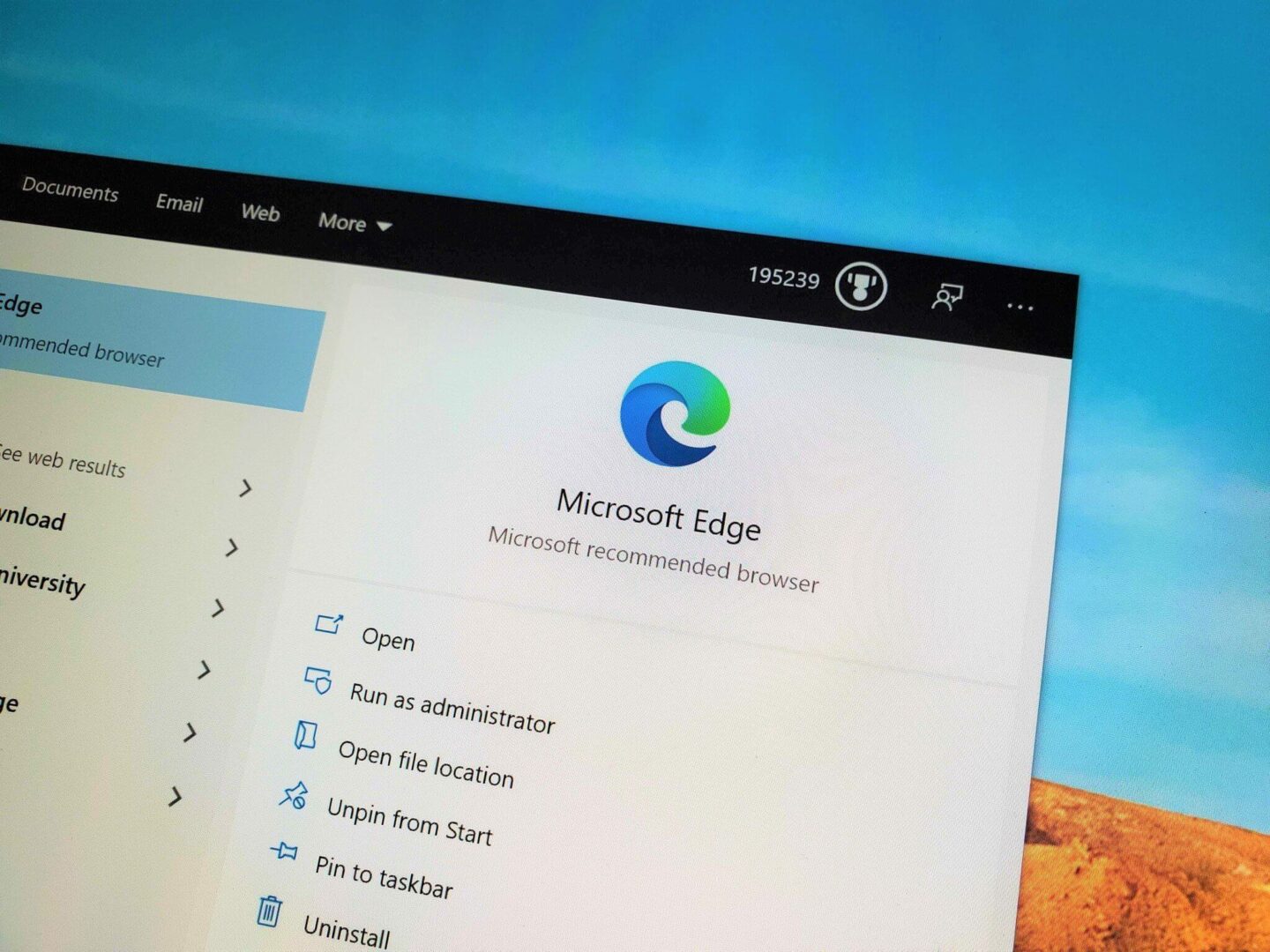
Low-RAM laptops face continuous performance struggles during daily web browsing tasks. Consequently, background process bloat frequently overwhelms system memory on entry-level machines. Standard web browsing now requires substantial RAM resources due to complex web applications. Therefore, unexpected memory spikes instantly cause severe system slowdowns and application crashes. Many budget laptops still ship with 4GB or 8GB of RAM today. Thus, users must actively manage active browser features to maintain smooth laptop operation.
Microsoft Edge recently introduced smart features to improve user search productivity. Specifically, the Edge contextual address bar feature offers real-time suggestions and proactive contextual address bar nudges. However, these constant background processes generate significant Edge memory overload on resource-constrained devices. Furthermore, these background evaluation services constantly monitor your active tabs and typing patterns. As a result, low-RAM laptops experience severe lag, delayed keystrokes, and excessive system swapping. Therefore, learning how to stop Edge address bar lag becomes essential for maintaining acceptable laptop performance.
This comprehensive guide addresses the root cause of Microsoft Edge address bar memory consumption. Additionally, we provide step-by-step solutions to disable these background nudges permanently. By implementing these optimizations, you will reclaim vital system memory instantly. Furthermore, your low-RAM laptop will regain crisp responsiveness across daily computing workflows. Let us explore the technical mechanics behind this issue and apply permanent performance fixes.
Understanding Edge Contextual Address Bar Nudges
The omnibox in modern browsers serves as more than a simple URL entry bar. Instead, Microsoft Edge transforms the omnibox into an active intelligence hub. Whenever you navigate websites, Edge contextual address bar features evaluate your page content dynamically. Consequently, the browser generates proactive contextual address bar nudges, search suggestions, and related topic links inside the address bar. While these contextual address bar nudges assist research, they demand substantial CPU and RAM resources during continuous background operation.
Behind the scenes, Microsoft Edge runs multiple background workers to support real-time contextual awareness. For instance, the Edge process model isolates address bar predictions into separate background tasks. As you scroll through pages, these background services continuously scan text and fetch online suggestions. Therefore, your laptop executes active network queries and local text parsing simultaneously. On high-end systems, these micro-tasks pass completely unnoticed by users. However, on low-RAM laptops, these continuous tasks rapidly consume available memory buffers.
Furthermore, these background tasks actively interact with Windows virtual memory systems. When physical RAM fills up, Windows writes active process data onto your solid-state drive or hard drive. This continuous page-swapping process creates massive disk activity spikes and severe system freeze frames. Consequently, simple address bar suggestions directly cause full-system performance bottlenecks on low-RAM machines. Thus, disabling unnecessary address bar predictive features offers immediate operational relief.
WARNING: Memory Thrashing Risk
Low-RAM laptops (4GB–8GB) running multiple active tabs alongside background address bar nudges are highly prone to memory thrashing. This state occurs when virtual memory swapping consumes all disk bandwidth, causing complete system responsiveness loss.
Why Low-RAM Laptops Suffer From Address Bar Bloat
Hardware constraints significantly compound the performance impact of dynamic browser features. Modern operating systems like Microsoft Windows consume approximately 3GB of RAM just for baseline operation. Consequently, opening a browser on a 4GB system leaves almost zero buffer for additional background tasks. Therefore, every Edge background process directly competes with critical OS operations. When Edge background processes expand, system memory allocation reaches dangerous saturation levels instantly.
In addition, integrated graphics processors (iGPUs) in budget laptops share system memory with the CPU. Because these GPUs lack dedicated VRAM, they reserve vital system RAM for graphic rendering tasks. Meanwhile, Microsoft Edge uses hardware acceleration to render address bar overlays and smooth UI animations. Consequently, the browser requests additional video memory from the system pool precisely when running contextual address bar nudges. This dual demand rapidly exhausts remaining memory capacity on budget laptops.
Finally, modern web standards demand high memory overhead for secure sandbox isolation. Microsoft Edge isolates individual browser features into distinct executable threads for security purposes. While sandboxing prevents browser exploits, it duplicates memory overhead across numerous isolated processes. Consequently, predictive address bar services maintain their own dedicated memory allocation pools. Therefore, shutting down these non-essential predictive services yields immediate, measurable memory savings.
Step-by-Step Guide: Disabling Contextual Nudges in Edge
Fortunately, you can easily disable contextual address bar nudges directly through Microsoft Edge configuration settings. Following these precise steps will terminate background evaluation workers instantly and prevent Edge memory overload on low-RAM devices.
Step 1: Access Edge Address Bar Privacy Settings
First, open Microsoft Edge on your computer. Next, click the three horizontal dots in the upper-right corner to open the main menu. Select Settings from the drop-down menu options. Alternatively, enter edge://settings/privacy directly into your Microsoft Edge address bar and press Enter. This action opens the Privacy, Search, and Services configuration menu immediately.
Step 2: Modify Search and Service Preferences
Scroll down to the bottom of the Privacy page to locate the Services section. Next, click on the Address bar and search option located at the bottom. Inside this sub-menu, locate the toggle labeled “Show me search and site suggestions using my typed characters”. Next, switch this toggle to the Off position immediately. Furthermore, locate the setting for “Show me suggestions from history, favorites and other data on this device” and adjust it according to your preference.
Step 3: Disable Contextual Suggestions and Copilot Integration
Next, return to the main Settings menu and select Sidebar or Copilot and AI options. Locate the setting labeled “Allow Edge to access page content” or “Show contextual suggestions”. Turn this toggle Off immediately. Consequently, Edge stops analyzing active webpage text for address bar nudges in real time. This single configuration change dramatically cuts down Edge background process activity.
PRO-TIP: Quick Navigation Shortcut
Type edge://settings/search directly into your Edge address bar to bypass nested menus. This takes you directly to the address bar optimization options, saving time during technical maintenance.
Advanced Edge Flag Tweaks for Maximum RAM Savings
For maximum resource optimization, you can adjust hidden experimental flags inside Microsoft Edge. These advanced settings disable deeper background services that standard settings menus do not expose.
First, type edge://flags into your address bar and press Enter to access the experimental flags dashboard. Next, use the search box at the top to search for “omnibox”. Locate the flag titled Omnibox Rich Entity Suggestions. Change its dropdown state from Default to Disabled. Consequently, Edge will no longer download rich visual images and extra data for address bar suggestions.
Next, search for “Zero Suggest” inside the flags search bar. Locate the flag named Enable Zero Suggest in search field or Omnibox Zero Suggest. Change this setting to Disabled immediately. Normally, Zero Suggest fetches contextual queries before you even start typing in the address bar. Therefore, disabling this flag completely stops preemptive background network requests and memory allocation.
Finally, search for “Calculate target area for touch events” or “Parallel downloading” to ensure streamlined network execution. After modifying these flags, click the prominent blue Restart button at the bottom of the screen. Edge will restart with all background predictive flags fully disabled. As a result, your browser will operate with a significantly lighter memory footprint.
Additional Edge Optimization Techniques for Low-RAM PCs
While disabling contextual address bar nudges solves specific memory spikes, implementing comprehensive browser optimizations yields the best long-term results on low-RAM laptops. Consider combining address bar fixes with these proven browser management strategies:
- Enable Sleeping Tabs: Navigate to
edge://settings/systemand enable Sleeping Tabs immediately. This feature automatically puts inactive tabs to sleep, freeing up system memory for active tasks. Check out official guidelines on Microsoft Edge Support to customize sleeping tab timers effectively. - Activate Efficiency Mode: Enable Efficiency Mode in Edge system settings. This setting automatically balances browser resource consumption based on your laptop’s current power state and RAM availability.
- Disable Startup Boost: Turn off Startup Boost inside system settings. Startup Boost keeps core Edge processes running in the background continuously, consuming valuable RAM even when the browser is closed.
- Manage Extension Overhead: Review installed browser extensions regularly. Disable heavy extensions, as each extension spawns isolated background processes that consume additional system memory.
- Utilize Built-in Task Manager: Press
Shift + Escinside Edge to open the internal Edge Task Manager. Identify and close specific memory-heavy tabs or background processes instantly. Learn more about memory debugging through MDN Web Performance Documentation.
Additionally, keeping your operating system optimized plays a crucial role in overall system stability. Make sure to monitor system performance using the native Windows Task Manager regularly. You can reference Microsoft Docs Technical Troubleshooting for advanced insights into system process management. Furthermore, review our hardware guides on Technical Forum Hardware Optimization for comprehensive laptop maintenance strategies.
Conclusion: Enjoy a Faster, Leaner Browsing Experience
Contextual address bar nudges bring helpful search shortcuts, but they create unnecessary strain on low-RAM laptops. The continuous background processing, network fetching, and UI rendering severely impact system performance on 4GB and 8GB machines. Fortunately, turning off these proactive features restores your browser’s speed without sacrificing basic search capabilities.
By following the steps in this guide, you can successfully stop Edge address bar lag and eliminate Edge memory overload. Disabling predictive address bar suggestions and modifying hidden Edge flags provides immediate RAM relief. Furthermore, combining these fixes with Efficiency Mode and Sleeping Tabs ensures your laptop remains fast and responsive during heavy browsing sessions.
Got a low-RAM laptop that needs extra performance tuning? Drop a comment below with your device specs, or share this guide with anyone struggling with browser lag! Let’s keep our legacy hardware running fast.