The mobile app market looks very different in 2026. For more than a decade, social media platforms dominated download charts and user attention. That trend has started to shift. AI-powered assistants now sit at the center of how people search for information, create content, solve problems, and manage daily work.
The most striking part is how quickly the change happened. Consumers once opened social apps to discover information. Now many start with an AI assistant instead. They ask questions, summarize documents, generate images, and brainstorm ideas without leaving a single app. Three names consistently appear at the top of download rankings: ChatGPT, Gemini, and Microsoft Copilot. Each platform serves a slightly different audience. Yet all three benefit from the same reality. People increasingly view AI assistants as practical tools rather than experimental software.
From my perspective as an IT consultant, this shift feels similar to the early smartphone era. Back then, users downloaded apps to replace desktop software. Today, users download AI apps to replace a growing number of individual tasks. In many cases, one AI assistant can perform work that previously required several separate applications.
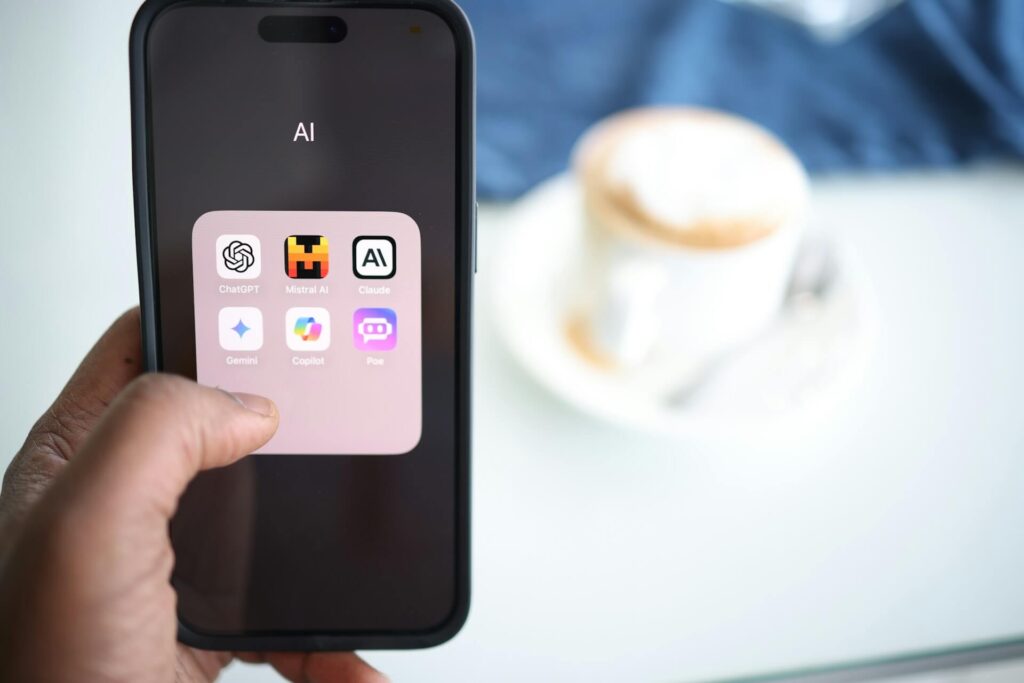
This trend also explains why AI apps now outpace many social platforms in growth. Users often visit social media for entertainment. They turn to AI assistants to get something done. That difference matters because utility tends to create stronger habits over time. As a result, 2026 has become a defining year for the mobile software industry. The competition is no longer just about social engagement. It is increasingly about which AI platform becomes the primary digital assistant for millions of users worldwide.
1. The 2026 AI App Download Boom
The surge in AI app downloads did not happen because of marketing alone. Real improvements in AI performance pushed adoption forward. Users now receive faster responses, better reasoning, stronger voice capabilities, and more accurate results than they could just a few years ago.
Several factors accelerated the growth. Smartphone manufacturers began integrating AI functions directly into devices. Operating systems added AI shortcuts and assistant features. Cloud computing providers expanded infrastructure to support millions of simultaneous AI interactions.
At the same time, consumer awareness reached a tipping point. Earlier AI applications often attracted technology enthusiasts and early adopters. That audience has expanded dramatically. Teachers use AI to prepare lessons. Students use it for research support. Freelancers use it to speed up workflows. Small businesses rely on it for content creation and customer communication.
Another important factor is accessibility. Most leading AI apps offer free entry points. Users can install the app and begin testing capabilities within minutes. That low barrier makes experimentation easy and encourages widespread adoption.
What makes this download boom different from previous mobile trends is the frequency of use. Many users do not open these apps once a week. They use them several times a day. That level of engagement drives stronger retention and encourages word-of-mouth growth.
Developers are paying attention as well. Increasing investment now flows toward AI-powered products instead of traditional app categories. Companies want features such as conversational interfaces, intelligent search, automated content generation, and personalized assistance. As a result, AI functionality has become a core product requirement rather than an optional extra.
The numbers tell a simple story. Users want software that reduces effort and saves time. AI assistants deliver exactly that. Consequently, download momentum continues to accelerate across both consumer and business segments.
2. Why ChatGPT Continues to Lead Global Downloads
ChatGPT maintains a strong position because it remains one of the most recognizable AI brands in the world. Brand awareness matters, especially when new users decide which assistant to try first.
However, name recognition alone does not explain its success. The platform consistently expands its capabilities while keeping the user experience straightforward. New users can open the https://chatgpt.com/ and immediately understand how it works. That simplicity lowers friction and encourages continued use.

Another advantage comes from versatility. Many competing apps excel in specific areas, but ChatGPT appeals to a broad audience. A student can use it for study assistance. A marketer can draft campaign ideas. A software developer can troubleshoot code. A business owner can create reports and summaries.
Voice interaction has also strengthened adoption. Users increasingly treat AI assistants as conversational tools rather than search engines. Speaking naturally often feels faster than typing, especially on mobile devices. As voice capabilities improve, engagement tends to increase.
The platform’s multimodal AI features add another layer of value. Users can work with text, images, documents, and voice conversations in a single environment. That flexibility reduces the need to switch between applications.
From a business standpoint, ChatGPT benefits from a strong ecosystem effect. As more people use the platform, more organizations build workflows around it. Educational institutions, startups, marketing agencies, and consulting firms frequently incorporate AI-assisted processes into daily operations.
Developers also benefit from the OpenAI developer platform, which allows businesses to integrate AI capabilities into their own applications and services.
Trust also plays a role. Users often stay with the assistant they already understand. Once people develop effective prompts and workflows, they become less likely to switch platforms. That familiarity strengthens retention and supports continued download growth.
Most importantly, ChatGPT has become a default reference point in the AI industry. When consumers hear about generative AI, ChatGPT is often the first product that comes to mind. That position provides a substantial advantage in attracting new users entering the AI market for the first time.
3. Gemini’s Ecosystem Advantage
Gemini approaches the market from a different angle. While ChatGPT benefits heavily from brand recognition, Gemini gains strength from Google’s ecosystem.
The integration opportunity is enormous. Billions of users already interact with Google products every day. Search, Gmail, Android, Maps, Docs, and Workspace create a network of touchpoints that few competitors can match.
That ecosystem allows Gemini to appear where users already spend their time. Instead of asking people to adopt a completely new workflow, Google can place AI assistance inside familiar products. This strategy reduces learning curves and encourages faster adoption.
Android gives Gemini another significant advantage. Many smartphone owners encounter Gemini features directly on their devices through https://www.android.com/ai/. Visibility at the operating-system level creates opportunities that stand-alone applications often struggle to achieve.
Productivity remains one of Gemini’s strongest use cases. Users can summarize emails, organize information, draft documents, and manage workflows within Google Workspace AI integration. For professionals already invested in Google Workspace, that integration feels natural.
Google also benefits from decades of experience handling large-scale information retrieval. Users frequently expect AI tools to combine conversational responses with access to current information. This expectation aligns closely with Google’s historical strengths.
Developers represent another important growth segment. Google continues integrating Gemini capabilities into development environments, cloud services, and enterprise tools. These connections help extend adoption beyond consumer markets.
What stands out most is how Gemini fits into existing digital habits. Users do not need to rebuild their routines from scratch. They simply gain AI assistance within products they already use every day.
That convenience remains one of the strongest forces in technology adoption. People rarely choose the most powerful tool. They often choose the tool that fits seamlessly into their workflow. Gemini’s ecosystem strategy positions it well to capitalize on that behavior as AI competition intensifies throughout 2026.
Learn more through Google’s Gemini ecosystem.
4. Copilot’s Enterprise-to-Consumer Expansion
Microsoft Copilot followed a different path than many competing AI apps. It did not start as a consumer-first product. Instead, it gained traction inside workplaces where productivity and efficiency drive purchasing decisions.
That early enterprise focus gave Copilot a strong foundation. Millions of professionals already relied on Microsoft services every day. Word, Excel, Outlook, Teams, and Windows formed part of their routine long before AI assistants entered the picture.
From an IT consulting perspective, this strategy made perfect sense. Businesses often adopt new technology before consumers do. Once employees become comfortable with a tool at work, many want similar capabilities on their personal devices.
Microsoft capitalized on that pattern. Copilot expanded beyond business workflows and became more accessible to everyday users. The company integrated it into Windows, Edge, and mobile applications. As a result, users encountered Copilot naturally rather than searching for a separate solution.
The productivity angle remains one of Copilot’s strongest advantages. Many users care less about experimentation and more about saving time. They want help summarizing emails, organizing spreadsheets, creating presentations, and managing schedules.
Organizations increasingly rely on Microsoft Copilot productivity tools and Microsoft 365 Copilot documentation to streamline workplace tasks and improve efficiency.
Another factor contributes to its growing popularity. Microsoft owns one of the world’s largest software ecosystems. Users rarely need to leave familiar environments when using Copilot. That convenience reduces friction and encourages repeat usage.
I often see this behavior among small business owners and consultants. They already spend hours inside Microsoft products. Adding an AI assistant to existing workflows feels easier than learning an entirely new platform.
The result is a gradual but steady expansion from enterprise software into mainstream consumer adoption. That trend helps explain why Copilot continues climbing download charts while strengthening its position in both professional and personal computing.
5. AI Apps Versus Social Media: A New Growth Curve
For years, social media companies focused on one central goal: keeping users engaged for longer periods. Success often depended on maximizing screen time and content consumption.
AI apps operate differently.
Most users open ChatGPT, Gemini, or Copilot with a specific objective in mind. They need an answer, a summary, a recommendation, or help completing a task. The interaction tends to be goal-oriented rather than entertainment-focused.
That distinction changes user behavior in important ways.
Social media platforms rely heavily on endless content feeds. AI assistants rely on conversation and problem-solving. One model encourages browsing. The other encourages productivity.
This shift mirrors changes I have observed among clients. Many professionals now use AI assistants before opening a traditional search engine. They often consult an AI app before searching through forums, documentation, or social platforms.
Students show similar habits. Instead of scrolling through multiple videos or discussion threads, they ask direct questions and receive immediate responses. The process feels faster and more efficient.
Social media remains enormously influential. It is not disappearing anytime soon. However, growth patterns have matured in many regions. AI applications, by contrast, continue attracting first-time users at a rapid pace.
Retention metrics also tell an interesting story. Entertainment-driven platforms compete constantly for attention. Utility-based applications build habits through repeated value. When a tool consistently saves time, users return frequently.
That dynamic creates a different growth curve. AI apps gain momentum because they solve problems. Social networks gain momentum because they capture attention. In 2026, the problem-solving model appears increasingly attractive to both consumers and businesses.
6. Key Technologies Fueling Adoption
The recent growth in AI app downloads did not happen by chance. Several technical advances arrived at the right time and pushed the industry forward.
Large language models remain a major factor. Modern systems understand context more effectively than earlier versions. They maintain longer conversations and produce more reliable responses.
Users notice those improvements immediately. Better outputs create better experiences. Better experiences encourage more downloads.
Multimodal processing has also changed expectations. Today’s AI assistants can work with text, voice, images, documents, and screenshots. Users no longer view AI as a text-only tool.
For example, someone can upload a photo, ask questions about it, and receive useful guidance within seconds. That capability expands practical use cases far beyond traditional chat interactions.
Voice technology continues to improve as well. Conversations feel more natural than they did only a few years ago. Faster response times make interactions smoother and more engaging.
Cloud infrastructure plays an equally important role. Massive data centers process billions of AI requests daily. Without that computing power, modern AI assistants could not serve millions of concurrent users.
Advances in model optimization have also reduced costs. Providers can deliver stronger performance while controlling infrastructure expenses. Those efficiencies help support free and low-cost service tiers.
Personalization contributes another layer of value. AI assistants increasingly remember preferences, workflows, and context. Users spend less time repeating instructions and more time accomplishing tasks.
Taken together, these technologies create a much stronger user experience. People do not download AI apps because they contain advanced technology. They download them because the technology produces useful results quickly and consistently.
7. Mobile Platforms Become AI-First Experiences
Smartphones have entered a new phase. For many years, mobile innovation focused on hardware improvements. Manufacturers highlighted larger displays, faster processors, and better cameras.
Now AI sits near the center of the conversation.
Operating system developers increasingly build AI features directly into mobile experiences. Instead of launching separate applications, users can access assistance from search bars, voice controls, keyboards, and system-level tools.
This trend changes how people interact with their devices.
Users can rewrite messages, summarize documents, organize notes, and generate content without switching between multiple apps. Tasks that once required several steps now happen inside a single workflow.
Android plays a major role in this transition. Google’s deep integration strategy places AI capabilities throughout the operating system. Users encounter Gemini features across various touchpoints during everyday use.
Microsoft pursues a similar vision through cross-device experiences. Windows PCs, mobile applications, cloud services, and productivity tools increasingly work together through Copilot.
Apple and other platform providers continue expanding AI functionality as well. The broader industry recognizes that AI assistance has become an expected feature rather than a premium extra.
From a practical standpoint, convenience drives adoption more than innovation alone. Most users care about outcomes, not technical architecture. They appreciate tools that reduce effort and save time.
I see this trend every time clients upgrade devices. Questions no longer focus only on battery life or storage. Increasingly, buyers ask about built-in AI features and productivity capabilities.
That shift carries major implications for software developers. Applications that integrate seamlessly with AI-powered mobile environments will likely gain an advantage. Apps that ignore these changes may struggle to maintain visibility.
The broader result is clear. Mobile platforms are evolving from collections of individual apps into intelligent ecosystems. ChatGPT, Gemini, and Copilot currently lead that movement, and their download growth reflects the demand behind it.
8. User Behavior Shifts in the Age of AI Assistants
One of the most important trends behind AI app growth is changing user behavior. People now approach information differently than they did just a few years ago.
In the past, most users opened a search engine, reviewed several websites, and pieced together answers themselves. Today, many start with an AI assistant instead. They want a direct response rather than a list of links.
I see this shift regularly when working with clients. Business owners often ask ChatGPT, Gemini, or Copilot before searching through forums or documentation. They prefer immediate guidance over extended research sessions.
The same pattern appears in education. Students increasingly use AI assistants to summarize concepts, explain topics, and organize study materials. Many view AI as a starting point for learning rather than a supplemental tool.
Content creation habits have changed as well. Marketing teams use AI for outlines, brainstorming, headlines, and editing support. Writers use it to accelerate early drafts. Developers use it to troubleshoot code and review logic.
Another noticeable change involves app consolidation. Users no longer want ten separate tools for ten different tasks. They prefer a single assistant that handles writing, research, planning, translation, and content generation.
Convenience drives much of this behavior. Switching between applications consumes time. AI assistants reduce those interruptions and keep users focused on the task at hand.
Voice interaction also continues gaining traction. More users speak naturally to their devices instead of typing detailed queries. This approach feels faster, especially when multitasking.
Perhaps the biggest shift involves expectations. Users now expect software to assist rather than simply respond. They want recommendations, summaries, insights, and automation. Traditional applications rarely offered that level of support.
As those expectations spread, software vendors face increasing pressure to add AI capabilities. Users now view intelligent assistance as a standard feature rather than a premium bonus.
9. Revenue Models Behind AI App Success
Strong download numbers generate attention, but downloads alone do not create sustainable businesses. AI companies still need reliable revenue streams to support development and infrastructure costs.
Most leading AI apps rely on a freemium approach. Users gain access to basic features at no cost. Advanced capabilities sit behind paid subscriptions.
This model lowers barriers to adoption. New users can test an AI assistant without financial risk. Once they discover value, many choose premium plans for higher limits and additional features.
ChatGPT, Gemini, and Copilot all benefit from this structure. Free tiers attract large audiences. Paid subscriptions generate recurring revenue from power users.
Enterprise customers add another layer of income. Businesses often purchase AI services for entire teams instead of individual users. These contracts can generate substantial long-term revenue.
From a consulting standpoint, enterprise adoption often matters more than consumer spending. Organizations seek measurable productivity gains. If an AI assistant saves employees several hours weekly, the investment becomes easier to justify.
API services also contribute significantly to revenue growth. Software companies integrate AI models into their products and pay based on usage. This arrangement creates an entirely separate business channel beyond app subscriptions.
Platform ecosystems strengthen the financial picture further. Microsoft benefits when Copilot increases engagement across Microsoft 365 services. Google gains value when Gemini enhances Workspace and Android experiences. These indirect benefits support broader business objectives.
Operating costs remain an important consideration. Running advanced AI systems requires significant computing resources. Providers must balance performance, reliability, and profitability.
As competition increases, pricing strategies will become more important. Companies must convince users that premium features justify monthly fees. At the same time, they must maintain attractive free offerings to support continued growth.
The strongest platforms will likely succeed through a combination of subscriptions, enterprise contracts, API services, and ecosystem integration. Relying on a single revenue source may become increasingly difficult as the market matures.
10. What the Download Rankings Mean for the Future of Tech
Download rankings often reveal where the technology industry is heading. The current success of ChatGPT, Gemini, and Copilot signals a broader shift that extends far beyond mobile applications.
For years, technology companies competed to become destinations. They wanted users to spend more time inside their platforms. AI assistants introduce a different dynamic. They focus on completing tasks efficiently rather than maximizing engagement.
That distinction could reshape software development over the next decade.
Developers increasingly design products around AI-assisted experiences. New applications often launch with conversational interfaces from day one. Companies recognize that users expect faster interactions and more personalized support.
Search behavior will likely continue evolving as well. Traditional web searches are not disappearing, but AI-generated responses increasingly influence how users discover information. Businesses must adapt their digital strategies accordingly.
Workplace software faces similar changes. Productivity tools now compete on intelligence as much as features. Users expect applications to summarize content, automate routine tasks, and provide contextual assistance.
Hardware manufacturers are responding too. Smartphones, laptops, and operating systems increasingly advertise AI capabilities as major selling points. This trend suggests long-term confidence in continued adoption.
From my perspective, the current rankings indicate something larger than a temporary surge in interest. They reflect a structural change in how people interact with technology.
Consumers have experienced the benefits firsthand. They have seen how AI assistants can reduce effort, improve efficiency, and accelerate everyday tasks. Once users experience those advantages, many become reluctant to return to older workflows.
The companies leading downloads today hold a valuable position. However, leadership remains far from guaranteed. Technology markets change quickly. User expectations evolve even faster.
Still, one conclusion seems clear. AI assistants have moved beyond the experimental stage. They now occupy a central role in the software ecosystem. The success of ChatGPT, Gemini, and Copilot suggests that AI-first computing will influence product design, business strategy, and user behavior for years to come.
💡 Pro Tip
If you want to evaluate the future winners in AI, don’t focus only on download numbers. Watch daily active users, enterprise adoption, ecosystem integration, and subscription growth. These indicators typically reveal long-term platform strength before broader market reports catch up.
Key Takeaways
- ChatGPT, Gemini, and Microsoft Copilot dominate AI app downloads in 2026.
- AI apps are growing faster than many traditional social media platforms.
- Built-in operating system integration is accelerating adoption.
- Enterprise AI adoption continues driving growth and revenue.
- Users increasingly prefer AI-powered assistance over manual research.
- The competition for becoming the default digital assistant is intensifying.
- Ecosystem integration may prove more important than standalone features.
Final Thoughts
The rise of ChatGPT, Gemini, and Microsoft Copilot represents more than a download trend. It marks a shift in how people work, learn, create, and interact with information.
As AI assistants become more integrated into everyday devices and workflows, their influence will continue expanding across both consumer and enterprise markets. The companies that combine strong technology, practical utility, and seamless ecosystem integration will have the best chance of leading the next phase of digital innovation.
What Do You Think?
Are ChatGPT, Gemini, or Copilot becoming part of your daily workflow?
Share your thoughts in the comments below. Which AI assistant do you use most often, and what tasks does it help you accomplish? If you found this article helpful, please share it with colleagues, friends, and fellow tech enthusiasts to keep the conversation going.