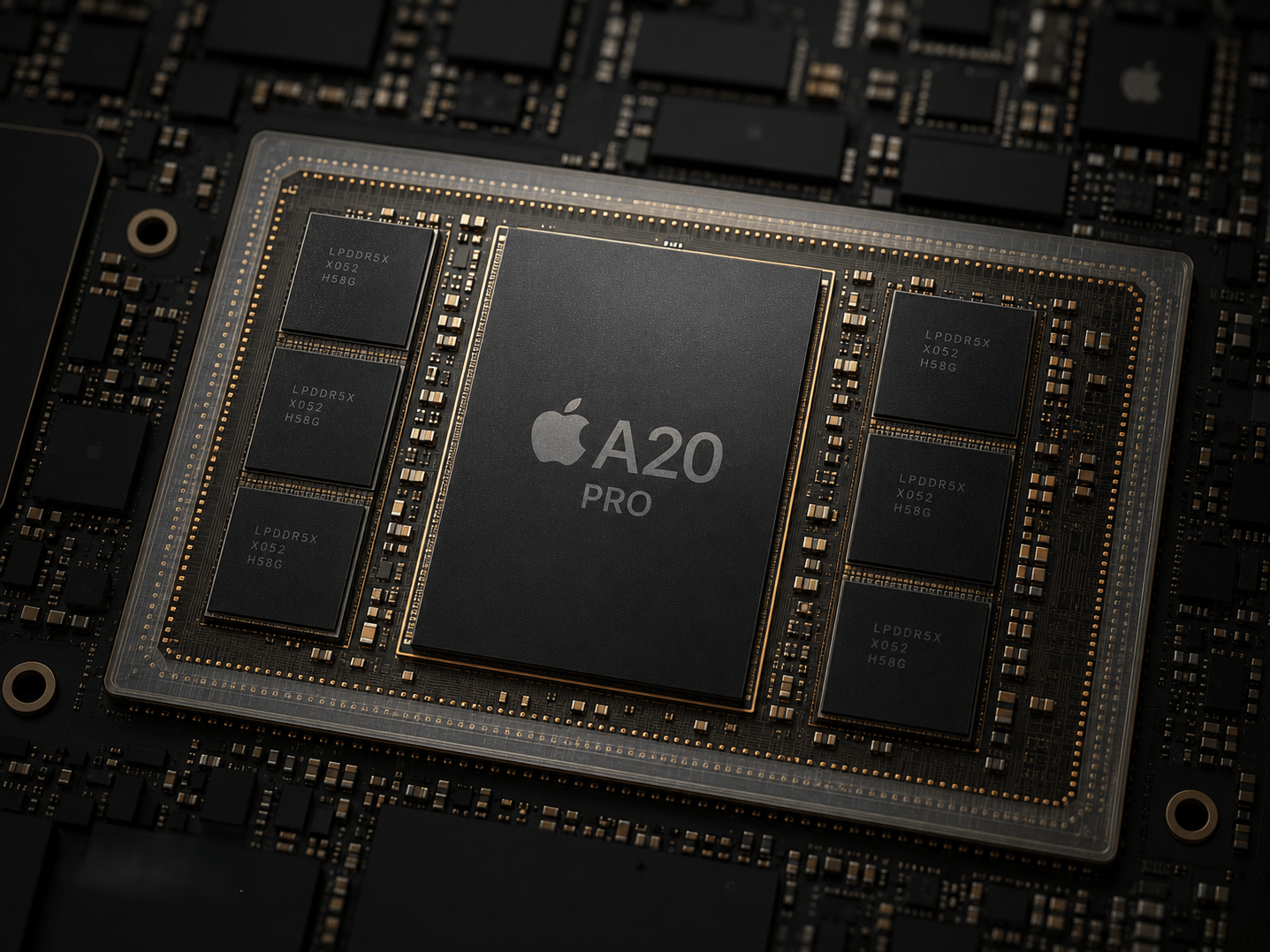
Apple official hardware engineering teams recently shocked the tech world again. Specifically, company executives announced the breakthrough Apple A20 Pro chip during their latest keynote event. Consequently, hardware analysts are carefully reviewing the radical system-on-chip improvements.
This new silicon doubles total Neural Engine performance compared to previous generations. Moreover, the updated design fundamentally transforms modern on-device AI processing capabilities for handheld devices. Mobile hardware continues to evolve rapidly, but this launch marks a massive leap forward.
In this deep dive, we will examine the underlying architecture of this revolutionary processor. Additionally, we will evaluate its real-world impact across software, battery life, and data security.
The Next Evolution of Apple Silicon Architecture
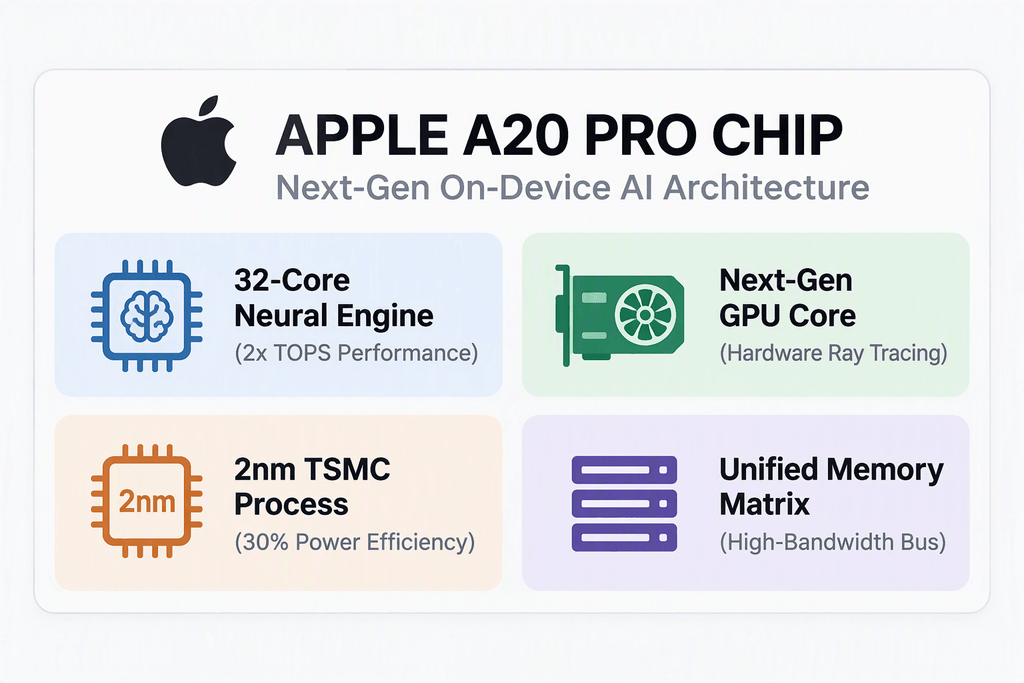
Engineers designed the new chip using advanced manufacturing methods. Specifically, the processor utilizes the cutting-edge TSMC 2nm process node for maximum transistor density. Therefore, the physical design packs over 25 billion transistors into a microscopic area.
Besides raw density, this refined Apple Silicon architecture optimizes energy consumption dramatically. Consequently, the chip delivers peak computational performance while lowering overall thermal output.
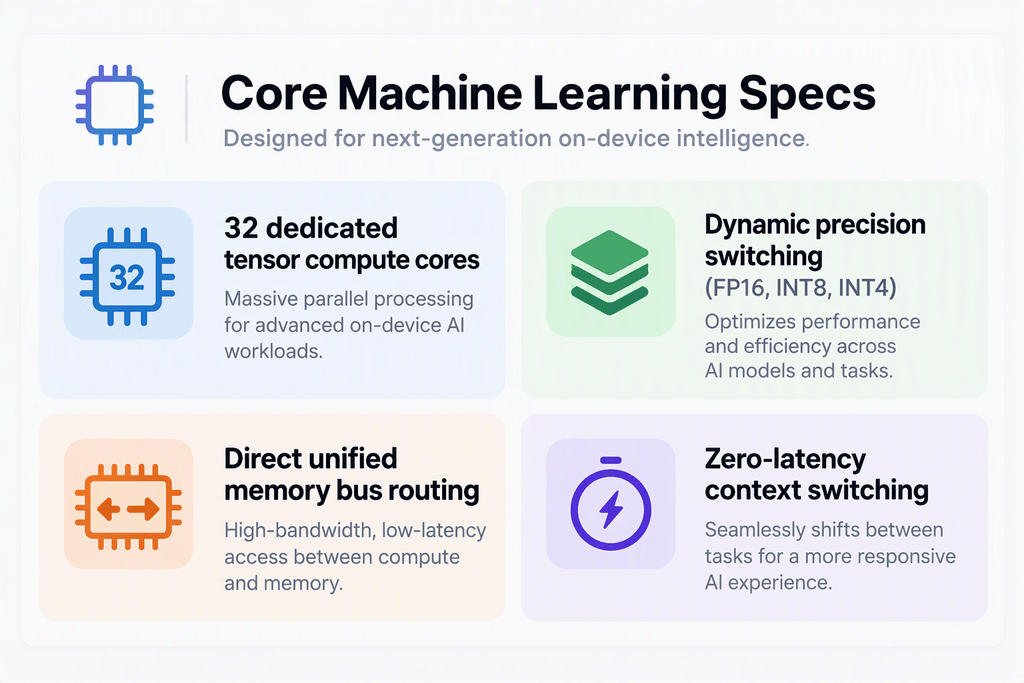
Furthermore, memory bandwidth saw a substantial hardware upgrade this year. The unified memory bus now transfers data at unprecedented speeds across all onboard cores. As a result, the central processor, graphics engine, and neural cores share resources seamlessly.
Indeed, eliminating traditional memory bottlenecks allows instant data access during heavy workloads. This unified approach directly benefits demanding machine learning algorithms and heavy multitasking routines.
Unpacking the 32-Core Neural Engine
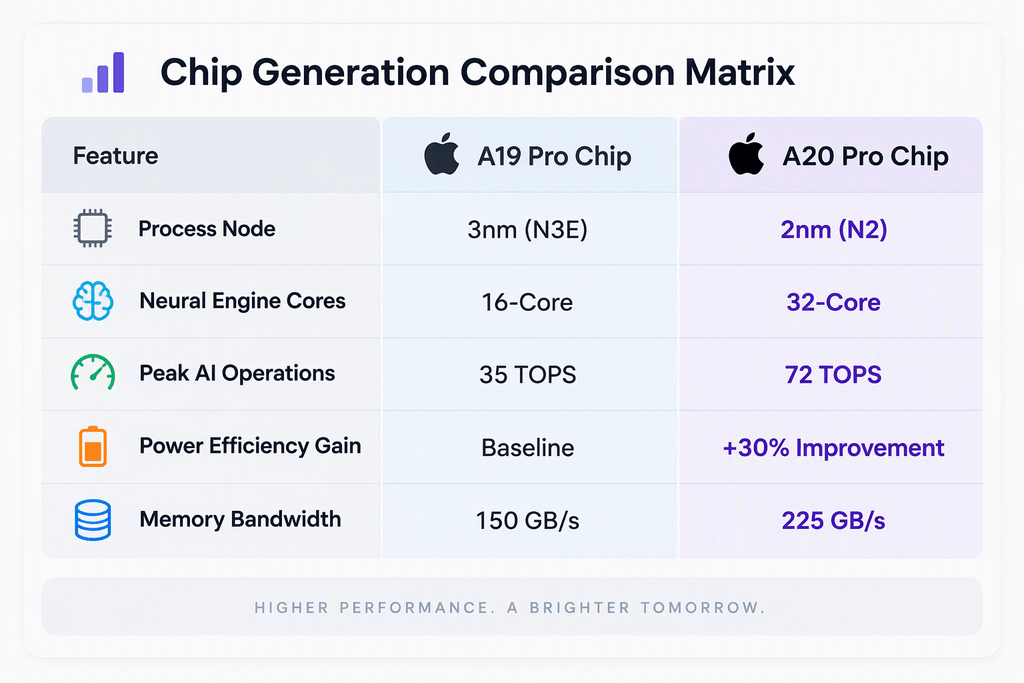
The flagship upgrade centers directly on the upgraded machine learning cores. Apple doubled the dedicated matrix multiplication units within the processor array. Consequently, the new 32-core configuration achieves over 70 trillion operations per second.
Therefore, local machine learning models execute instantly without relying on remote servers. Users will immediately notice smoother language processing and real-time image rendering.
In addition, optimized instruction sets allow the hardware to run larger generative artificial intelligence models. Developers can now deploy parameter-heavy neural networks directly on consumer smartphones.
Accordingly, apps execute complex tasks like voice synthesis and video isolation effortlessly. To learn more about modern machine learning concepts, review the MIT Computer Science & Artificial Intelligence Lab research portals.
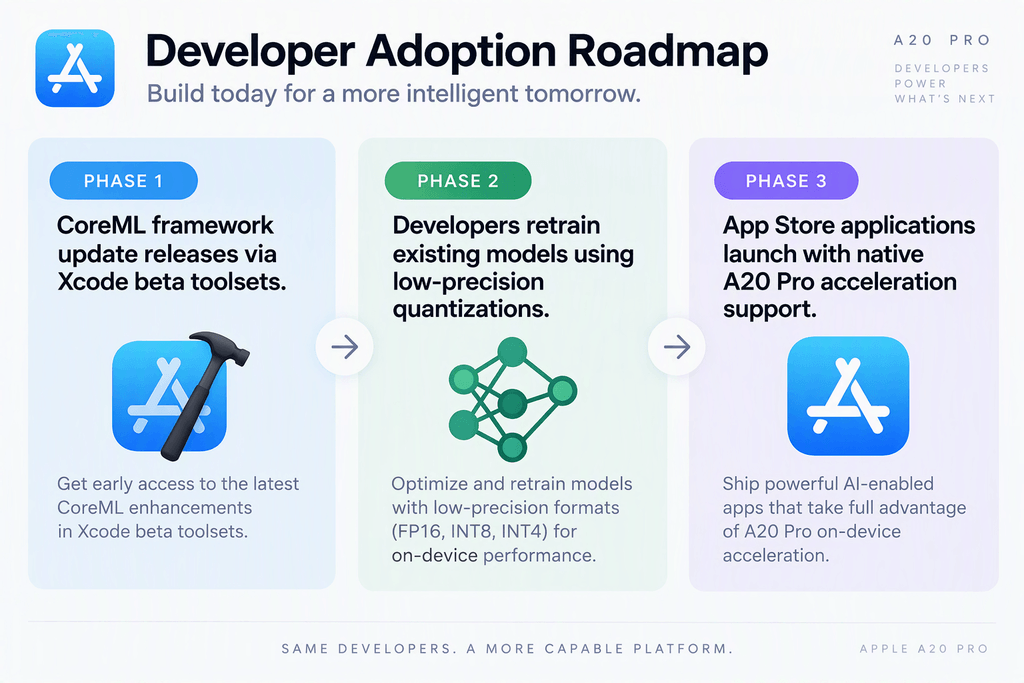
💡 Pro-Tip: Mobile developers should recompile their existing CoreML models using the latest Xcode developer tools. Doing so automatically optimizes neural pipelines for the A20 Pro matrix acceleration modules.
Transforming On-Device AI Processing and Security
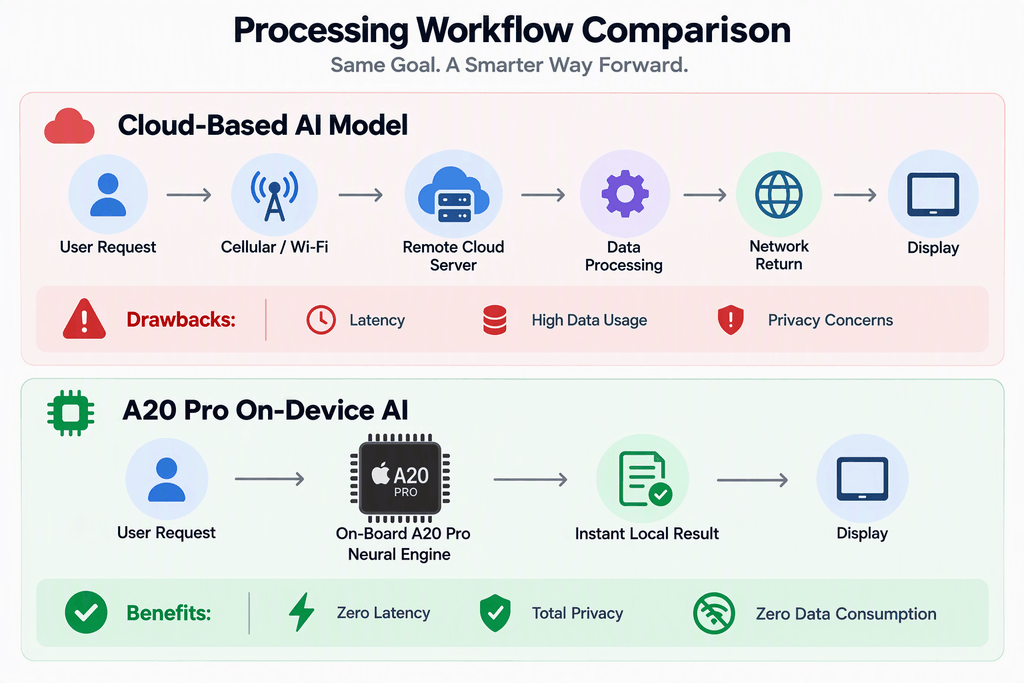
Privacy remains a foundational pillar for modern consumer electronics. Thankfully, executing complex workloads locally protects sensitive user data completely from external exposure.
Because the processor handles calculations on the physical device, personal files never leave your palm. Therefore, biometric identifiers, private photos, and confidential text logs remain entirely secure from outside interception.
Furthermore, offline capability provides a massive functional advantage for mobile workers. Users can generate summaries, edit high-resolution media, and translate languages without an active internet connection.
Consequently, productivity remains high even in remote areas or airplane environments. Modern smartphone AI chips must balance capability with total user privacy, and this design sets a high standard.
- Enhanced Privacy: Sensitive data stays strictly inside local storage.
- Zero Latency: Offline operations eliminate network delays completely.
- Lower Data Usage: Local execution saves costly cellular bandwidth.
- Reliable Access: Tools function anywhere without requiring active Wi-Fi connection.
Graphical Fidelity and CPU Efficiency Gains
While artificial intelligence dominates the headlines, traditional computing workloads also receive massive upgrades. The updated graphics pipeline includes hardware-accelerated ray tracing engines.
Consequently, mobile games render realistic lighting, dynamic shadows, and accurate reflections effortlessly. Developers can now deliver console-quality graphics directly onto handheld screens without overheating the battery.
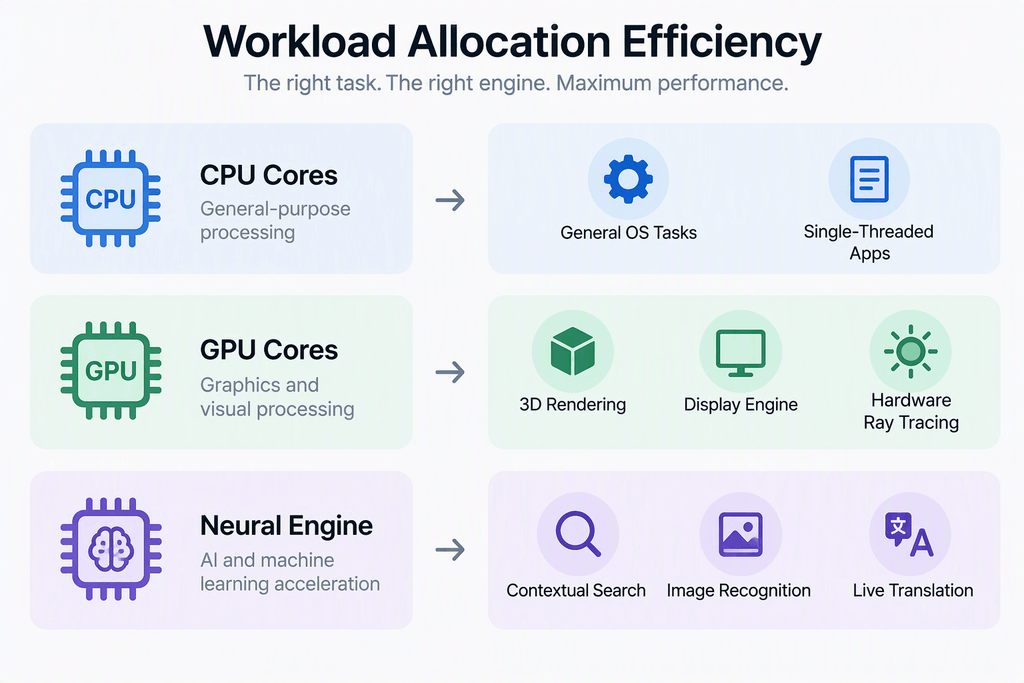
Simultaneously, six central processing cores handle standard operating system operations efficiently. Two high-performance cores tackle heavy computational loads with minimal latency.
Meanwhile, four high-efficiency cores manage background operations to extend total device battery life. For additional technical background on semiconductor manufacturing, explore the latest IEEE Spectrum hardware reports.
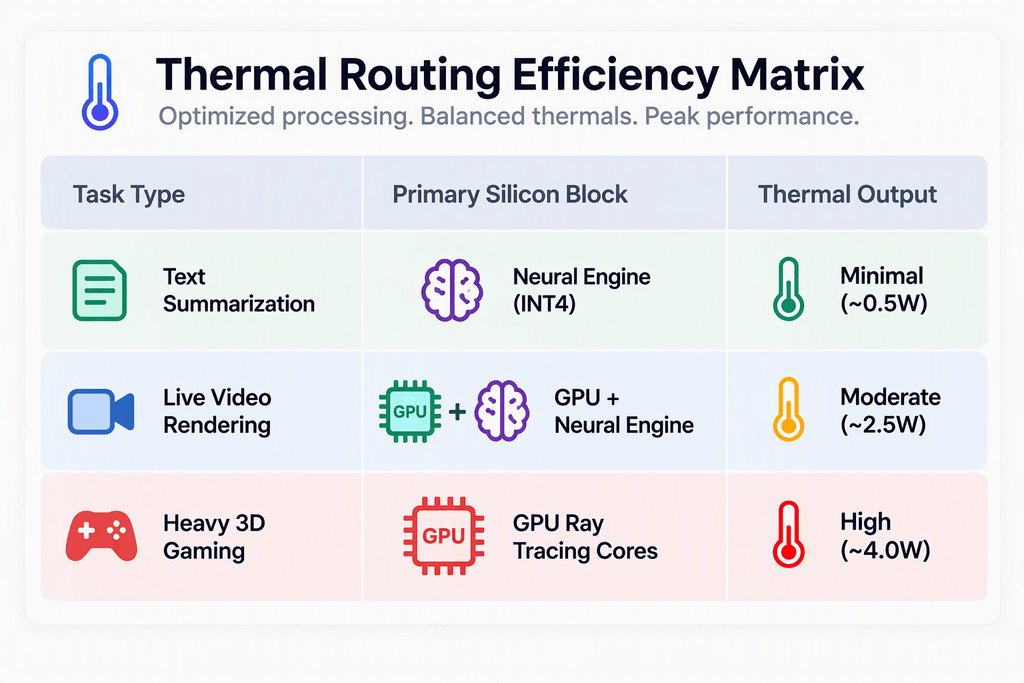
⚠️ Warning: Intensive real-time graphics rendering combined with continuous camera capture can still generate elevated skin temperatures. Avoid enclosed protective cases during extended outdoor video capture sessions to prevent thermal throttling.
Impact on Third-Party Software Development
Hardware upgrades mean little without powerful software integration. Fortunately, software engineers can access these hardware acceleration features through native system frameworks.
Developers can easily tap into the hardware using updated developer toolkits. Consequently, third-party apps will feature smarter automation, instant photo editing, and proactive personal assistance very soon.
Furthermore, local execution reduces server infrastructure costs significantly for app developers. Instead of paying expensive cloud hosting fees, applications utilize local silicon processing power.
Therefore, independent developers can launch sophisticated software tools without massive upfront venture capital. Read detailed developer documentation directly on the Apple Developer Portal for implementation guides.
Power Consumption and Thermal Management Strategy
Packing higher performance into a tiny phone chassis presents serious thermal challenges. Nevertheless, engineers solved this issue through intelligent power routing algorithms.
The chip dynamically shifts computational workloads between specialized sub-processors in microseconds. Consequently, power draw drops significantly during continuous artificial intelligence operations.
Additionally, advanced thermal diffusion layers within the device chassis spread heat evenly. Therefore, users will not experience sudden frame drops or performance throttling during extended use.
This sustained performance capability distinguishes true pro-grade hardware from standard consumer devices. Check out industry benchmarks on AnandTech for deeper competitive comparisons.
Final Thoughts and Conclusion
The launch of this new silicon marks a pivotal moment for consumer technology. By doubling raw neural capabilities, the device bridges the gap between cloud computing and handheld hardware.
Furthermore, users no longer need to sacrifice data privacy to access high-speed machine learning tools. This processor proves that local execution represents the true future of personal computing.
Moving forward, competitors will certainly hurry to match these technical achievements. However, the tight integration between hardware engineering and custom software gives this architecture a clear head start.
As developers update their applications, consumers will enjoy unprecedented speed, privacy, and battery efficiency. Mobile tech has entered a dynamic new era, and hardware acceleration leads the charge.
What do you think about the new A20 Pro chip capabilities? Will local AI features influence your next smartphone upgrade?
Leave your thoughts in the comments below, share this article with fellow tech enthusiasts, and subscribe to technicalforum.org for more deep technical breakdowns!