
Managing production infrastructure requires strict cost controls. Anthropic recently released its most powerful artificial intelligence model to date. However, this massive upgrade comes with a significant financial risk for modern developers. Uncontrolled agentic workflows can quickly trigger a severe Claude Fable 5 bill shock. Therefore, implementing proper Anthropic API credit limits remains absolutely essential for your development budget.
This advanced model processes complex software engineering tasks autonomously. Furthermore, it retains instructions perfectly across long execution windows. This deep reasoning power demands heavy computational resources. Consequently, simple loops in your code can exhaust your entire budget within minutes. You must proactively safeguard your platform against these unexpected charges.
Fortunately, you can maintain full control over your infrastructure costs. This comprehensive guide outlines clear strategies to secure your environment. First, we will examine the expensive nature of long-horizon AI operations. Next, we will configure hard spending ceilings within your console. Finally, you will learn to implement intelligent automated fallbacks.
Understanding the True Cost of Extreme Capability
To protect your wallet, you must first understand the official Claude Fable 5 pricing structure. Anthropic charges ten dollars per million input tokens. Additionally, you must pay fifty dollars per million output tokens. These numbers look manageable on paper. However, the model uses a massive one-million-token default context window.
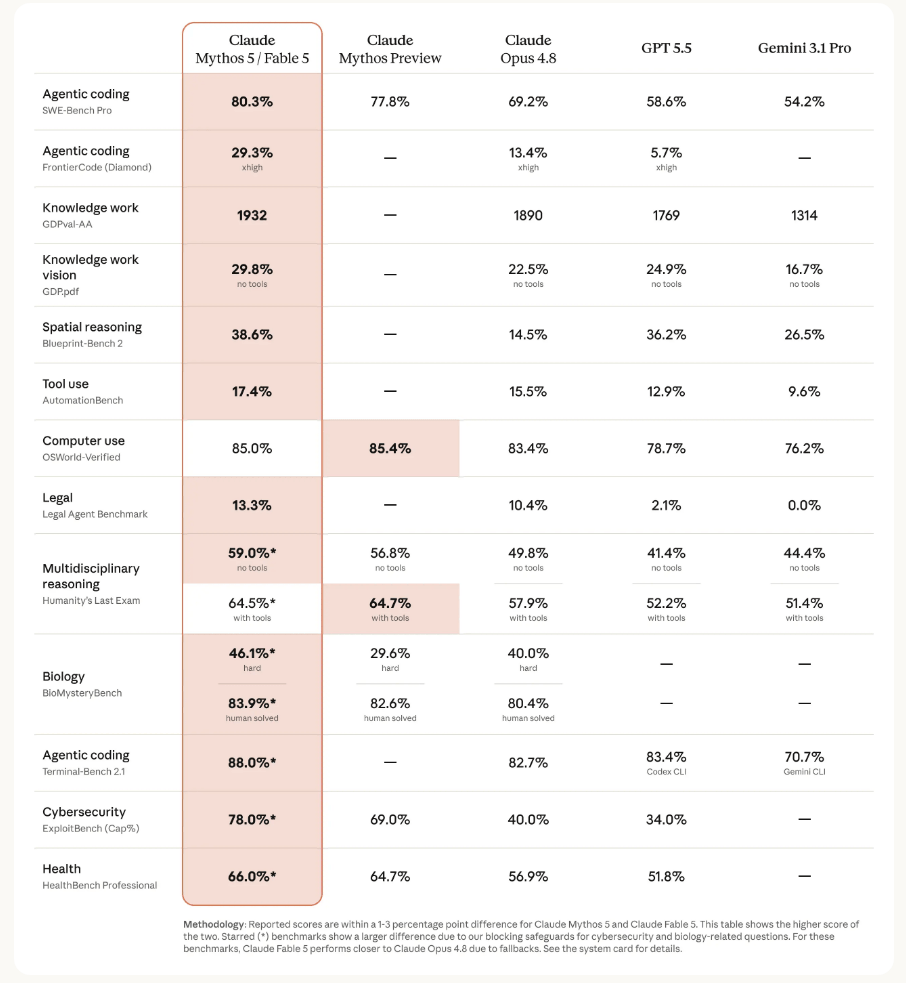
When you build complex agents, the token accumulation compounds fast. For instance, autonomous loops continuously feed the entire conversation history back into the system. As a result, each subsequent turn costs significantly more than the last one. A single runaway task can generate millions of tokens before you even notice.
⚠️ Warning: Failing to set strict spending boundaries can result in thousands of dollars in automated platform charges overnight. Never deploy autonomous agents without active budget guardrails.
Furthermore, the system relies on an adaptive thinking mechanism. This features stays active by default on every API call. While this process improves output quality, it increases the total generation time. Therefore, your applications will consume more resource units during intense reasoning cycles.
The Hidden Culprit: Long-Horizon Agentic Execution
Developers love the breakthrough performance of modern AI tools. For example, engineers recently used these capabilities to build native games directly on GitHub. You can read user discussions regarding these massive projects on Reddit. Yet, these incredible multi-day runs present a massive threat to your financial predictability.
When an agent manages an engineering migration, it launches independent subagents. Then, these subagents execute parallel tasks across your codebase. If a subagent encounters an unhandled error, it might loop endlessly. Consequently, the parent system continues to fund this broken process without any human intervention.
To counter this danger, you must practice strict LLM cost optimization. You can review the core documentation on the Claude Platform Docs site. By understanding how the system structures nested calls, you can write better constraints. Ultimately, monitoring tools must supervise every automated worker in your tech stack.
Setting Up Hard Anthropic API Credit Limits
Your primary line of defense begins in the console settings. Anthropic enforces a credit-based payment system for high-tier models. Therefore, you should avoid linking an unrestricted corporate credit card directly to automated billing. Instead, buy explicit monthly allocations via Anthropic usage credits to cap your maximum exposure.
First, log into your central dashboard. Then, navigate directly to the billing section. Here, you must disable the automatic top-up feature immediately. While automatic top-ups prevent service interruptions, they also allow infinite spending loops. By disabling this setting, your application gracefully pauses when it hits zero dollars.
JSON
{
  "error": {
    "type": "billing_error",
    "message": "Your organization has reached its credit limit."
  }
}
Second, you must configure granular alerts for your team. Set up email notifications at fifty, seventy-five, and ninety percent of your budget. These early warnings give you time to audit active sessions. Thus, you can terminate inefficient processes before they trigger a hard service shutdown.
- Step 1: Open the Anthropic console dashboard.
- Step 2: Click on your Organization settings.
- Step 3: Select the Billing tab from the menu.
- Step 4: Turn off the “Auto-Top Up” toggle switch.
- Step 5: Save your updated spending thresholds.
Implementing Smart Claude Model Routing Fallbacks
Hard limits protect your bank account, but they can crash your application. Therefore, you must build robust Claude model routing fallbacks directly into your application code. When the premium model hits a cost bottleneck, your system should automatically downgrade the request. This approach preserves application uptime while slashing operational expenses.
You can implement a middleware layer that monitors token usage per session. If a single task exceeds your predefined budget, route the next call to Claude Opus 4.8. While Opus handles complex reasoning well, it features a different pricing model. Alternatively, you can drop down to Sonnet or Haiku for basic validation steps.
Python
def call_claude_with_fallback(prompt, budget_exceeded):
    if budget_exceeded:
        # Route to more affordable model to save costs
        return call_opus_4_8(prompt)
    else:
        try:
            return call_fable_5(prompt)
        except BillingLimitException:
            return call_opus_4_8(prompt)
Additionally, Anthropic uses advanced internal safety classifiers. If a user prompt triggers these filters, the API automatically diverts the request. According to Android Authority, these safety redirections shift workloads down to older versions seamlessly. You should mimic this exact behavior in your own custom integration scripts.
Strategic Claude Token Management
To achieve sustainable performance, you must master the art of Claude token management. You should never pass raw, uncompressed logs into your prompts. Instead, use summarizing agents to clean the context window frequently. This cleaning step removes redundant information and lowers your input fees.
Furthermore, take advantage of the new task budget headers. The platform now supports specific beta headers to control agentic depth. By setting these parameters, you limit the maximum computational effort per request. This prevents individual queries from spiraling into massive financial liabilities.
💡 Pro-Tip: Always use prompt caching for static instructions or large codebases. Caching your core system prompts reduces repetitive input fees by up to eighty percent.
Finally, establish explicit self-verification intervals in your scripts. Instruct your autonomous agents to check their own progress regularly. If an agent fails to resolve an issue after three attempts, force a human-in-the-loop intervention. This policy prevents costly, infinite debugging loops.
Final Thoughts
The latest advancements in artificial intelligence offer unprecedented engineering capabilities. However, great power requires disciplined infrastructure management. By setting hard credit limits, you completely eliminate the threat of sudden bill shock. Meanwhile, intelligent routing fallbacks ensure your production systems remain fully operational.
Monitor your dashboards closely and audit your agentic workflows this week. Your bottom line will thank you.
What Do You Think?
Have you experienced unexpected API charges with autonomous agents? How does your team handle model fallbacks? Let us know in the comments section below, and share this article with your fellow DevOps engineers!