A profound structural shift is quietly transforming the global artificial intelligence landscape. For the past several years, Western tech giants like OpenAI and Anthropic held an undisputed monopoly over enterprise mindshare. Recent production data from major global AI API routing platforms like OpenRouter, however, reveals a stunning market shock. Low-cost AI models originating from Chinese research labs have rapidly captured a massive share of the market. These systems now consistently command over 30% of weekly US enterprise token usage, even peaking at an astonishing 46%. This represents an explosive acceleration from the mere 4.5% market share recorded in early 2025.
Enterprise engineering teams are actively migrating their high-volume workloads away from costly, proprietary American frontier systems. This trend highlights a widening cost chasm that traditional vendors can no longer ignore. While American labs focus on massive, closed-source architectures, Chinese competitors are optimizing open-weight AI development. Consequently, Western enterprises are discovering that these alternative systems provide comparable intelligence at a fraction of the price. The ongoing shift is redefining how companies approach enterprise AI deployment and structural infrastructure budgeting.
The Economics of Inference: A Widening Cost Chasm
The primary driver behind this sudden migration comes down to pure financial arithmetic. The pricing disparity between American frontier systems and Chinese alternatives has widened dramatically with each subsequent model generation. For instance, Western flagship options like GPT-5.5 or Claude Opus 4.8 cost roughly $5.00 per million input tokens. Conversely, budget-friendly Chinese options like DeepSeek V4 Flash charge an incredibly low $0.09 per million input tokens. This represents an incredible 55x price difference for processing identical developer workloads.
+-----------------------------------+------------------------+
| Model Tier / Provider             | Input Cost per Million |
+-----------------------------------+------------------------+
| Western Frontier (GPT-5.5/Opus)   | $5.00                  |
| Chinese Flagship (DeepSeek Pro)   | $1.74                  |
| Chinese Flash Tier (DeepSeek/Z.ai)| $0.09                  |
+-----------------------------------+------------------------+
When an enterprise constructs complex, multi-step agentic workflows, these minor per-token differences quickly compound into massive line items. Automated software pipelines often consume billions of tokens daily to execute iterative code generation and data analysis. Paying premium token rents to closed-source providers rapidly becomes financially unsustainable for scaling startups and established enterprises alike. Therefore, corporate financial officers are stepping in to mandate aggressive inference budget optimization across all engineering departments. Cheap Chinese weights are transforming from a minor architectural curiosity into a core infrastructure necessity.
⚠️ Warning: Relying entirely on proprietary, closed-source APIs exposes your enterprise to sudden price volatility and vendor lock-in. Diversifying your model routing layer is critical to maintaining long-term budget stability.
Closing the Capability Gap on Enterprise Workloads
Historically, Western developers justified paying premium prices by pointing to the clear capability advantage of domestic models. However, recent industry evaluations prove that the technical performance gap has narrowed to near invisibility. Zhipu AI’s recent open-weight masterpiece, GLM-5.2, scored an impressive 74.4 on the rigorous FrontierSWE agentic coding benchmark. This remarkable result places it within a single percentage point of Anthropic’s expensive Claude Opus 4.8. Furthermore, it achieved this feat while running on highly optimized, domestic hardware architectures.
This rapid convergence explains why high-volume engineering domains are shifting so aggressively. Programming workloads historically represented only 11% of global AI routing platform traffic, but they have skyrocketed to over 50%. Chinese models happen to be disproportionately strong, fast, and economical at executing these exact structured coding tasks. Software development teams are realizing that they do not need the most expensive model to handle routine code documentation. Instead, they require reliable, specialized performance that aligns with a disciplined corporate budget.
The Rise of Open-Weight AI Infrastructure
Beyond upfront API cost reductions, the open-weight nature of these emerging models offers profound structural advantages. Proprietary platforms force companies to transmit sensitive enterprise data across external servers. By contrast, open-weight models allow engineering teams to download, modify, and self-host the entire network locally. This architectural freedom empowers organizations to build completely sovereign, private open-source AI infrastructure inside their own firewalls.
- Total Data Sovereignty: Corporate intellectual property never leaves the secure boundaries of your private cloud environment.
- Zero Token Rental Fees: Self-hosting eliminates unpredictable recurring usage bills from external platform providers.
- Custom Micro-Tuning: Engineers can deeply integrate proprietary internal codebases directly into the underlying model weights.
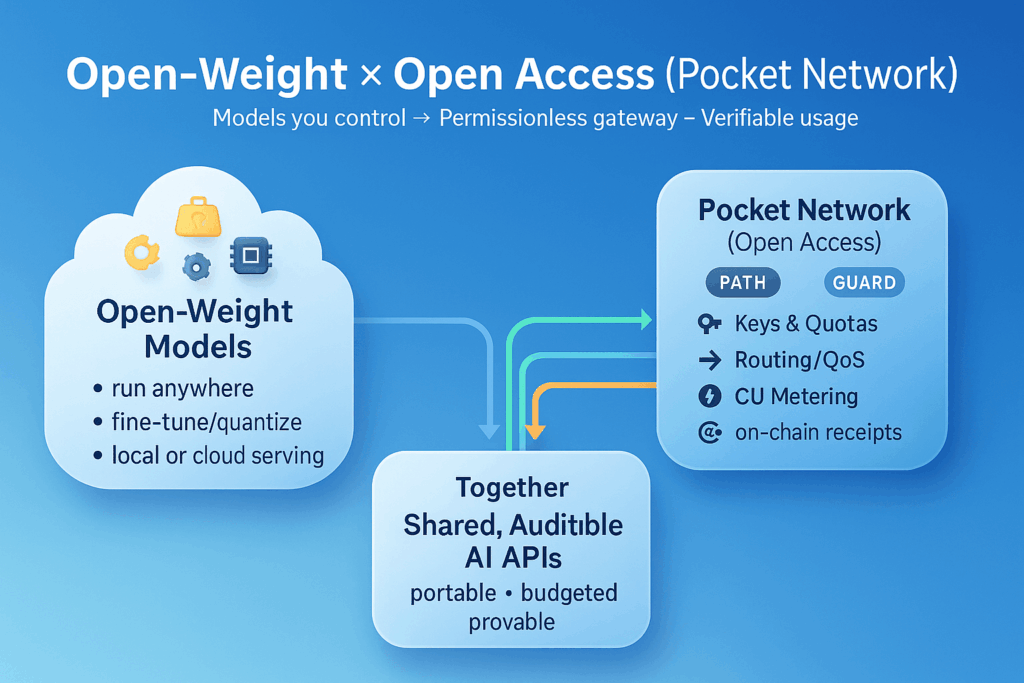
This structural shift validates recent public statements from prominent enterprise leaders. Many tech executives argue that the traditional per-token business model is fundamentally flawed for deep corporate integration. Modern businesses demand complete custody of their data stack, their compute resources, and their competitive operational alpha. As a result, procurement strategies are shifting their focus away from raw model benchmarks toward deep architectural ownership.
💡 Pro-Tip: Use an intelligent AI API routing layer to automatically send basic tasks to ultra-low-cost models. Reserve premium frontier systems exclusively for highly complex reasoning problems.
Geopolitical Realities and Procurement Risks
While the financial advantages of these systems remain undeniable, Western enterprises must navigate complex geopolitical realities. Recent industry briefings indicate that the Chinese Ministry of Commerce is considering strict export regulations on its most advanced AI architectures. Much like the export restrictions implemented by the United States, Beijing increasingly views advanced software intelligence as a critical national asset. Potential regulations could eventually limit or block overseas developer access to upcoming flagship model releases.
Additionally, compliance officers in heavily regulated Western sectors face ongoing anxieties regarding long-term data security and international compliance. Companies operating within healthcare, banking, or defense must carefully balance massive infrastructure savings against potential regulatory friction. If international access is abruptly restricted, organizations that are overly dependent on foreign infrastructure could face sudden operational disruptions. This reality makes model procurement strategy an incredibly critical boardroom discussion moving forward.
Final Thoughts: The New Era of AI Pragmatism
The striking rise of low-cost alternatives signals the end of the initial AI hype cycle. We are officially entering a new era characterized by strict engineering pragmatism. Enterprises are no longer willing to blindly pay premium prices for incremental benchmark gains. Instead, they are actively optimizing their deployment pipelines to prioritize efficiency, flexibility, and hard fiscal discipline.
The ongoing disruption proves that raw intelligence is rapidly becoming a commoditized resource. To survive this massive market transformation, Western frontier labs must fundamentally re-engineer their costly enterprise monetization strategies. Meanwhile, corporate technology leaders must remain agile, adaptive, and highly calculated. By balancing economic efficiency with smart risk management, forward-thinking organizations can successfully leverage this shifting landscape to build resilient infrastructure.
What is your organization’s current approach to balancing LLM performance against soaring inference costs? Are you considering integrating open-weight alternatives into your production stacks this year? Let us know your thoughts in the comments below, and share this article with your infrastructure team!