🧠 The Rise of Open-Source CPU Architecture
The global CPU market has long been dominated by Intel and AMD. Their x86 architecture powers most desktops and laptops today. However, a new contender is rapidly gaining traction—RISC-V.
RISC-V is an open-source instruction set architecture (ISA) that offers flexibility, transparency, and cost-efficiency. As demand grows for customizable and energy-efficient processors, RISC-V is becoming a serious alternative. Developers and manufacturers are now exploring its potential for everything from IoT devices to high-performance computing.
🔍 What Is RISC-V and Why It Matters
RISC-V stands for “Reduced Instruction Set Computer – Five.” It’s a free and open ISA developed at UC Berkeley in 2010. Unlike proprietary architectures, RISC-V allows anyone to design and implement processors without licensing fees.
This openness fosters innovation and lowers barriers for startups and academic institutions. The RISC-V Foundation now includes major players like Google, NVIDIA, and Western Digital. As a result, the ecosystem is expanding rapidly.
Moreover, RISC-V supports modular design. Developers can add or remove features based on specific use cases. This flexibility makes it ideal for embedded systems, wearables, and even AI accelerators.
🏭 RISC-V vs x86: Performance and Efficiency
While x86 processors dominate consumer markets, they come with legacy complexity. RISC-V, by contrast, offers a streamlined architecture. This simplicity leads to better power efficiency and easier verification.
For example, SiFive has launched RISC-V chips that rival ARM and x86 in performance. Their designs are already used in edge computing and automotive applications. Additionally, Alibaba’s T-Head division developed a RISC-V chip that runs Android, proving its viability for mobile platforms.
Although RISC-V still lags behind in raw desktop performance, it excels in specialized tasks. Its energy efficiency and scalability make it attractive for data centers and low-power devices.
🌐 Global Adoption and Industry Support
RISC-V adoption is accelerating worldwide. China, in particular, is investing heavily in RISC-V to reduce reliance on Western chipmakers. China’s National RISC-V Alliance aims to build a robust domestic ecosystem.
Meanwhile, NASA is exploring RISC-V for space applications due to its reliability and customizability. Even Intel joined the RISC-V Foundation, signaling a shift in industry attitudes.
Educational institutions also benefit. Students can study and modify RISC-V cores without legal restrictions. This democratizes hardware education and fosters future innovation.
🧩 Use Cases: From IoT to AI Accelerators
RISC-V is already powering a wide range of devices. In IoT, its low power consumption is a major advantage. Companies like Espressif use RISC-V in their microcontrollers for smart home products.
In AI, RISC-V enables custom accelerators tailored to specific workloads. This is crucial for edge AI, where latency and power matter. GreenWaves Technologies uses RISC-V to build ultra-low-power chips for audio and vision processing.
Even in automotive, RISC-V is gaining ground. Its modularity allows manufacturers to design chips for safety-critical systems with minimal overhead.
📈 Challenges and Future Outlook
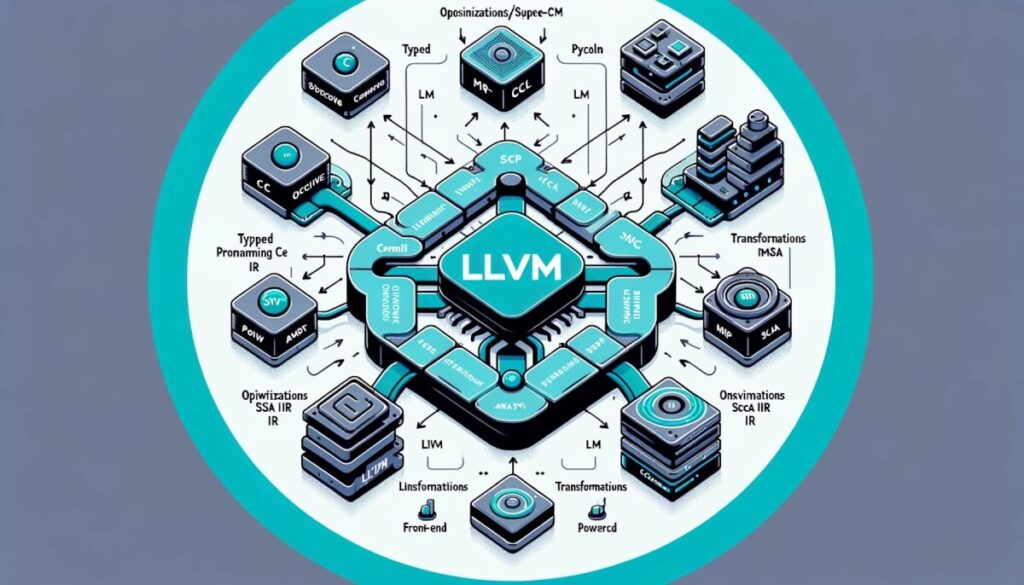
Despite its promise, RISC-V faces hurdles. Software support is still maturing. Many applications are optimized for x86 or ARM, making migration difficult. However, tools like LLVM and GCC now support RISC-V, improving compatibility.
Security is another concern. Open architectures can be vulnerable if not properly implemented. Yet, transparency also allows for faster auditing and patching.
Looking ahead, RISC-V could reshape the CPU landscape. As more companies adopt it, economies of scale will drive performance improvements. With growing support from governments, academia, and industry, its future looks bright.
🧠 Final Thoughts: Is RISC-V the Future?
RISC-V is more than a technical innovation—it’s a movement toward openness and collaboration. It challenges the status quo and empowers developers worldwide. While Intel and AMD remain dominant, RISC-V is carving out a niche that could redefine computing.
If you’re excited about open-source hardware or curious about CPU trends, share your thoughts in the comments below. What use case do you think RISC-V will dominate next?