
Wi-Fi 7, also known as 802.11be or Extremely High Throughput (EHT), is set to revolutionize networking. It promises unparalleled speed and efficiency for both homes and offices. We are therefore seeing its widespread adoption in 2026. This next-generation wireless standard significantly boosts performance. It tackles the growing demands of our connected world.
The digital landscape therefore continues its rapid expansion. Our reliance on robust and also high-speed internet connections grows daily. From seamless 8K streaming to lag-free virtual reality, current Wi-Fi standards sometimes struggle. Wi-Fi 7 thus emerges as a timely solution. It provides the necessary infrastructure. It moreover ensures a smooth and productive online experience. This article explores its impact. It also delves into real-world speed improvements. Furthermore, it examines the compatible hardware you will need.
The Driving Force Behind Wi-Fi 7 Adoption
Several factors fuel the rapid adoption of Wi-Fi 7 in 2026. First, the proliferation of data-intensive applications demands more bandwidth. Think cloud computing and also advanced gaming. Second, the rise of smart homes adds numerous connected devices. Each device requires a stable and fast connection. Third, businesses increasingly rely on high-speed wireless networks. This therefore supports their hybrid work models and also collaborative tools. Moreover, chip manufacturers and device makers are actively integrating Wi-Fi 7. This also accelerates its market penetration.

Manufacturers like Intel and Qualcomm are thus leading the charge. They are embedding Wi-Fi 7 capabilities into new devices. This includes laptops, smartphones, and also networking equipment. The ecosystem is growing quickly. This further pushes Wi-Fi 7 into the mainstream. Early adopters already experience its benefits. Therefore, others are quickly following suit. For more information, you can visit the Wi-Fi Alliance website: https://www.wi-fi.org/
Unprecedented Real-World Speed Improvements
Wi-Fi 7 delivers incredible speed enhancements. It uses several key technologies to achieve this. Multi-Link Operation (MLO) is a major innovation. MLO allows devices to send and receive data simultaneously. It uses different frequency bands (2.4 GHz, 5 GHz, and 6 GHz). This therefore dramatically increases throughput. It also reduces latency significantly. Furthermore, Wi-Fi 7 utilizes wider 320 MHz channels. This doubles the bandwidth compared to Wi-Fi 6E.
Moreover, 4096-QAM (Quadrature Amplitude Modulation) further boosts data rates. It packs more data into each signal. These combined advancements result in theoretical speeds of up to 46 Gbps. In real-world scenarios, users will experience multi-gigabit speeds. This translates to incredibly fast downloads. Streaming high-resolution content will also be flawless. Imagine downloading a 4K movie in seconds. Online gaming will therefore have virtually no lag.
Pro-Tip: While theoretical speeds are impressive, real-world performance varies. Factors like network congestion and distance impact actual speeds. Always consider your specific environment.
Essential Compatible Hardware for Wi-Fi 7
To harness the full power of Wi-Fi 7, you will need compatible hardware. This includes new routers, access points, and client devices. Look for devices explicitly stating “Wi-Fi 7” or “802.11be” compatibility. Leading network equipment manufacturers are thus releasing a new wave of devices. These therefore support the latest standard. Brands like TP-Link, Netgear, and ASUS are at the forefront.
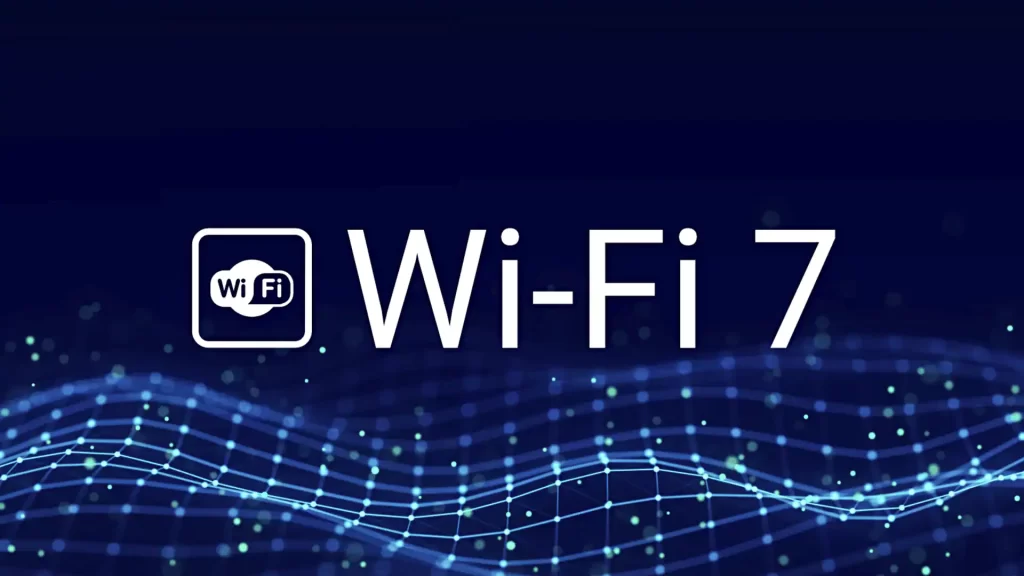
You will specifically need a Wi-Fi 7 router. This serves as the central hub of your network. Next, ensure your devices also support Wi-Fi 7. This includes your laptops, smartphones, and smart TVs. Many new flagship devices already feature Wi-Fi 7 chipsets. Upgrading your older devices may therefore be necessary. This ensures you fully benefit from the improved performance.
Consider also network interface cards (NICs) for desktop PCs. These cards enable Wi-Fi 7 connectivity. External Wi-Fi 7 adapters are also available. These adapters upgrade older laptops easily. Remember, a chain is only as strong as its weakest link. All components must support Wi-Fi 7. This ensures optimal performance. For more technical details on Wi-Fi 7 hardware, check out this article: https://www.howtogeek.com/861788/what-is-wi-fi-7/
Enhancing Home Networking with Wi-Fi 7
Wi-Fi 7 transforms home networking completely. It handles multiple demanding tasks simultaneously. You can stream 8K videos in several rooms. VR/AR applications will therefore run flawlessly. Furthermore, smart home devices will communicate instantly. Lag and buffering become a thing of the past. The increased capacity supports many devices concurrently. This is crucial for modern smart homes.

Families will therefore experience seamless connectivity. Everyone can enjoy their online activities without interruption. Wi-Fi 7 moreover provides better coverage. It also offers stronger signals throughout your home. This eliminates dead zones effectively. Mesh Wi-Fi systems with Wi-Fi 7 further enhance this. They create a robust and also expansive network. This therefore covers every corner of your living space.
Warning: Older devices will still connect to a Wi-Fi 7 network. However, they will operate at their older Wi-Fi standard speeds. They will not experience Wi-Fi 7 benefits.
Revolutionizing Office Networking with Wi-Fi 7
Businesses gain significant advantages from Wi-Fi 7. It supports high-density environments efficiently. Large offices with many users benefit greatly. Fast and reliable connections are critical. This enhances productivity and collaboration. Video conferencing will be crystal clear. Large file transfers will also be instantaneous. This therefore streamlines workflows significantly.
Hybrid work models especially benefit from Wi-Fi 7. Employees connect from various locations. They need consistent, high-performance access. Wi-Fi 7 ensures this robust connectivity. It handles numerous devices simultaneously. This includes laptops, tablets, and IoT office equipment. Moreover, it offers enhanced security features. These protect sensitive business data.

The improved latency further benefits real-time applications. Think of cloud-based software and virtual desktops. Wi-Fi 7 therefore provides the backbone. It supports the modern digital workplace. Enterprises should thus consider upgrading their infrastructure. This upgrade ensures they remain competitive. For business solutions, visit Cisco’s networking page: https://www.cisco.com/c/en/us/products/wireless/index.html
The Role of 6 GHz Band in Wi-Fi 7
The 6 GHz band is vital for Wi-Fi 7’s performance. It offers a large, uncongested spectrum. This band provides wider channels. It also reduces interference significantly. Wi-Fi 6E first introduced this band. Wi-Fi 7 further leverages its capabilities. This therefore ensures optimal speeds and reliability. Devices communicate without crowding existing bands.
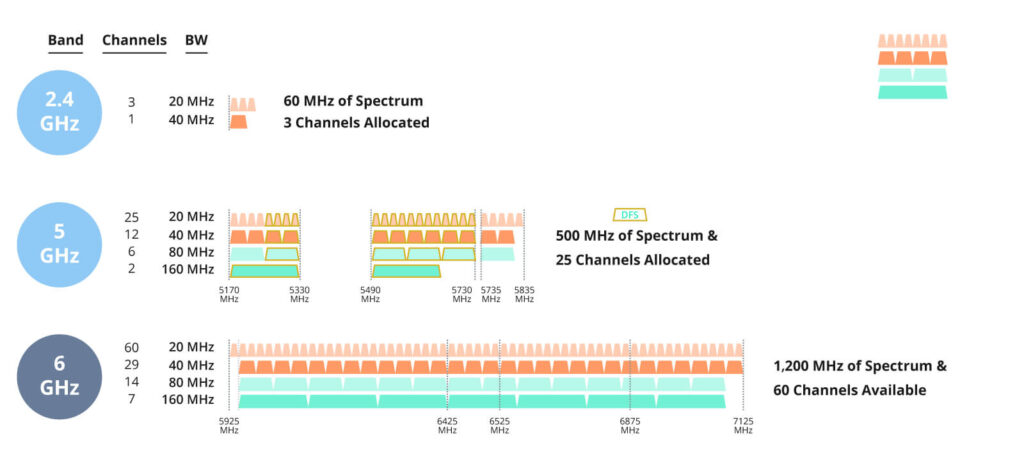
This dedicated spectrum is particularly beneficial. It supports high-bandwidth applications. VR headsets and also augmented reality devices thrive here. Moreover, the 6 GHz band enables more simultaneous connections. This is ideal for busy networks. It reduces bottlenecks effectively. The deployment of this band is therefore key. It unlocks Wi-Fi 7’s full potential.
However, the 6 GHz band has a shorter range. It struggles with physical obstructions more. Therefore, proper placement of access points is crucial. Consider this during your network planning. For more on the 6 GHz band, see Wikipedia: https://en.wikipedia.org/wiki/6_GHz_band
Security Enhancements in Wi-Fi 7
Wi-Fi 7 also brings important security upgrades. It builds upon the strong foundation of WPA3. WPA3 offers robust encryption and stronger authentication. This protects your network from various threats. Wi-Fi 7 further enhances this protection. It ensures your data remains secure. This is crucial for both personal and professional use.

Improved cryptographic algorithms are therefore integrated. These guard against sophisticated attacks. Enhanced privacy features are also included. These protect user data more effectively. Businesses can thus deploy Wi-Fi 7 with confidence. They know their networks are well-protected. Always keep your router firmware updated. This therefore ensures you have the latest security patches.
Regular security audits are also recommended. They ensure your network remains resilient. The Wi-Fi Alliance provides security best practices. You can find them here: https://www.wi-fi.org/discover-wi-fi/security
Conclusion: The Future is Fast and Connected
Wi-Fi 7 is indeed reshaping home and office networking. Its adoption in 2026 marks a significant milestone. It delivers unprecedented speeds and efficiency. Moreover, it provides robust security. You will experience a truly next-generation wireless experience. Upgrading to Wi-Fi 7 hardware is a wise investment. It prepares your network for the future.
We are excited about the possibilities Wi-Fi 7 offers. Have you already experienced Wi-Fi 7? What are your thoughts on its impact? Share your insights and questions in the comments below!