The digital transformation has sparked a global debate: Edge Computing vs. Cloud Computing. Both reshape how we store, process, and deliver data. Yet, as industries evolve, choosing the right model is critical for success.
Businesses seek faster response times and better data security. These needs fuel discussions around edge computing and cloud infrastructure. Although cloud computing has matured, edge computing is catching up fast.
So, which of these innovations holds the key to the future of IT? In this article, we’ll explore their core differences, advantages, drawbacks, and what the future may hold.
Understanding Cloud Computing: Scalability at Its Core
Cloud computing has revolutionized how businesses store and manage data. It allows remote access, real-time collaboration, and elastic scalability. Cloud services like Amazon Web Services (AWS), Microsoft Azure, and Google Cloud offer massive computing power.
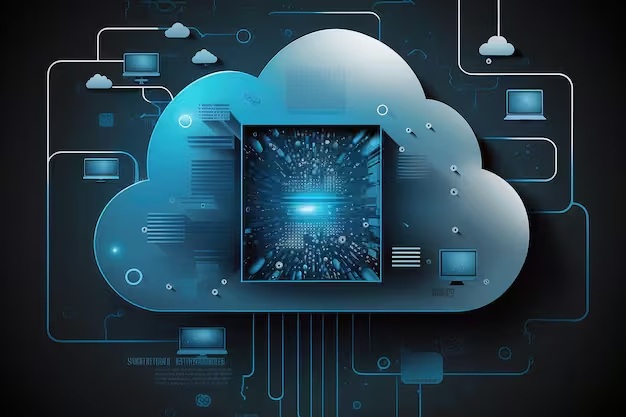
Cloud providers handle infrastructure, security, and maintenance. As a result, businesses can focus on innovation rather than hardware concerns. Cloud platforms support everything from SaaS to machine learning tools, making them integral to digital ecosystems.
However, cloud systems depend on consistent internet connectivity. Latency can become an issue, especially in remote or real-time applications like autonomous vehicles or manufacturing automation.
Decoding Edge Computing: Bringing Data Closer to the Source
Edge computing addresses the latency issues of cloud computing. It processes data near its source rather than relying on distant data centers. This proximity reduces lag, increases speed, and improves efficiency.
Devices like sensors, routers, and edge gateways play vital roles in edge environments. Industries like healthcare, retail, and manufacturing now turn to edge solutions to enable real-time decision-making.
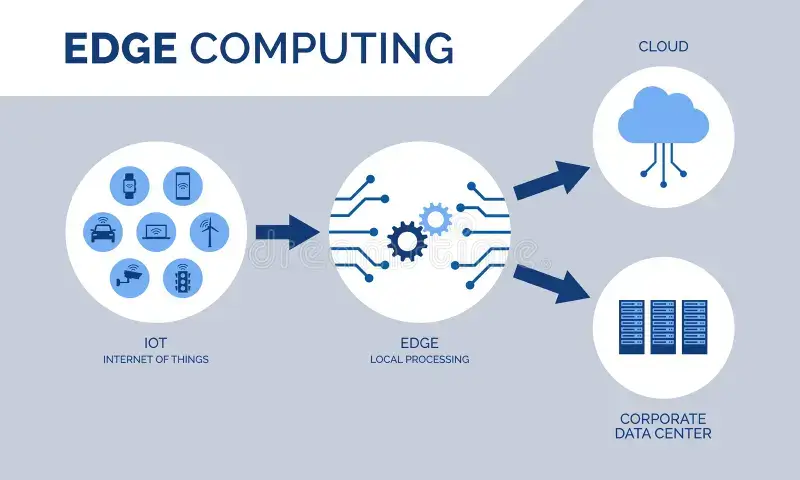
For example, Cisco’s Edge Computing Solutions help businesses respond instantly to data from IoT devices. Intel also pioneers in this space, offering edge-ready processors and platforms.
Key Differences Between Edge and Cloud Architectures
Cloud computing centralizes resources. Edge computing decentralizes them. That’s the primary structural difference between the two.
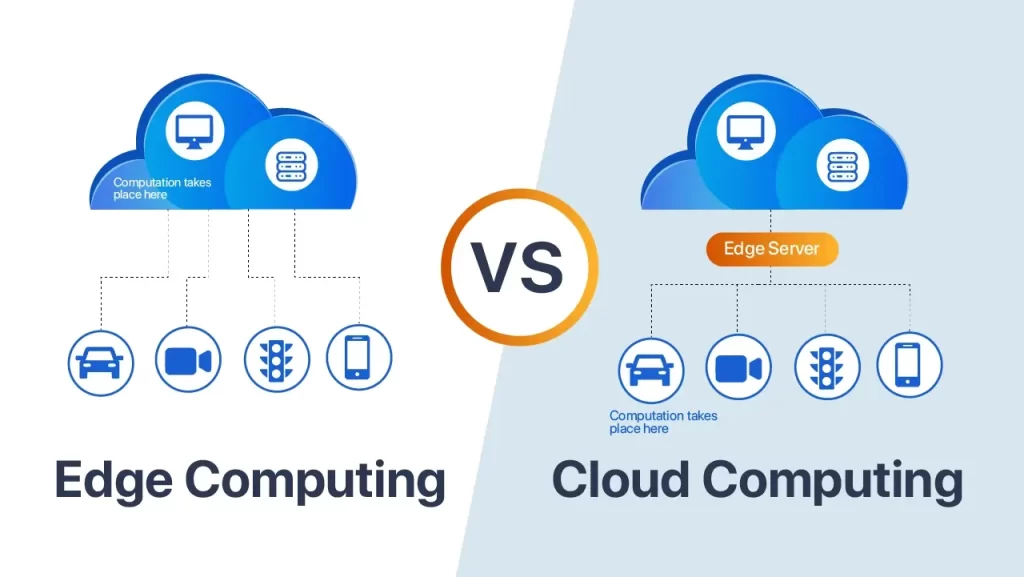
In the cloud, data must travel to a server, be processed, then return to the user. This delay can affect apps requiring split-second decisions. In contrast, edge systems eliminate this lag by operating locally.
Moreover, edge computing enhances privacy. Since data stays near the source, exposure risk reduces. IBM notes that localized data handling aligns well with regulatory requirements like GDPR and HIPAA.
Advantages and Limitations: Edge vs. Cloud
Cloud Computing Pros and Cons
Cloud systems offer virtually unlimited storage and computing power. They’re cost-effective for startups and scalable for enterprises.
Despite its benefits, cloud computing relies heavily on stable internet. It also raises concerns around latency and data sovereignty.
Edge Computing Pros and Cons
Edge computing provides lightning-fast processing. It’s ideal for time-sensitive applications like smart factories or AR/VR platforms.
However, deploying edge systems can be complex and expensive. They require localized infrastructure and advanced hardware management.
Use Cases: When to Choose Edge or Cloud
When to Use Cloud Computing
- You need to scale fast.
- Your users are globally distributed.
- Applications aren’t time-sensitive.
When to Use Edge Computing
- Speed is critical.
- Devices operate in remote areas.
- Real-time analytics are needed.
Autonomous driving systems and smart grids are better suited to edge solutions. Meanwhile, web hosting and file storage still benefit from cloud services like Dropbox.
Future Outlook: Convergence is the Key
Rather than replacing each other, edge and cloud computing may merge into a hybrid model. This synergy balances performance, cost, and flexibility.
Emerging technologies like 5G will amplify this trend. As 5G networks expand, edge devices will become smarter, enabling low-latency interactions. At the same time, cloud platforms will continue to provide centralized power for analytics and backup.
Leading analysts from Gartner predict that over 75% of enterprise data will be processed at the edge by 2025. This shift shows that hybrid IT infrastructures will dominate the coming decade.
Final Thoughts: So, Which One Is the Future?
Edge computing and cloud computing aren’t rivals. Instead, they’re partners in the evolving world of IT infrastructure. Each has distinct strengths suited for different challenges.
Your choice depends on your business goals, data priorities, and operational model. Still unsure which one suits you? Share your thoughts in the comments—we’d love to hear from you!