
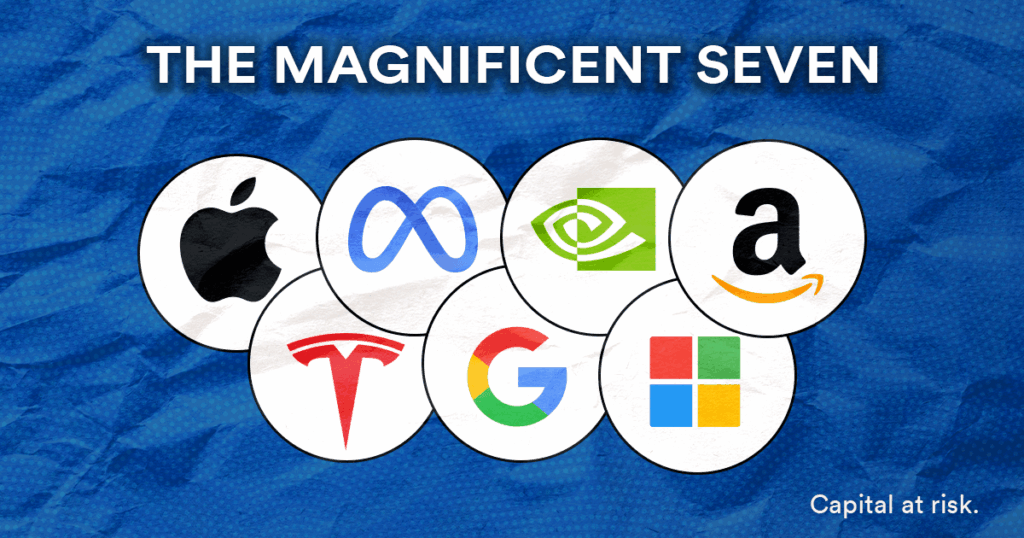
The “Magnificent Seven” tech stocks—Apple, Microsoft, Amazon, Alphabet, Meta, Tesla, and Nvidia—are reshaping the global investment landscape. These companies dominate the tech sector and influence the broader financial markets. Investors, analysts, and regulators now monitor their movements closely.
These tech giants have gained extraordinary market capitalization over the past decade. Their influence reaches from stock indexes to economic forecasts. Tech stocks and market dominance remain among the most searched topics in the financial world today. As a result, understanding their significance is crucial for any investor or market observer.
1. Who Are the ‘Magnificent Seven’?
The term “Magnificent Seven” borrows from the classic film, symbolizing strength and dominance. In finance, it refers to seven tech powerhouses: Apple, Microsoft, Amazon, Alphabet (Google), Meta (Facebook), Tesla, and Nvidia. These companies are not just leaders—they are pioneers in innovation, cloud computing, artificial intelligence, and more.
According to CNBC, these stocks alone have contributed to a significant portion of the S&P 500’s recent growth. Their combined market value exceeds $12 trillion, making them more valuable than the GDP of many countries.
2. The Growth Behind the Greatness
What sets these companies apart is not only their revenue but also their consistent innovation. For instance, Apple and Microsoft have diversified into services and cloud computing. Meanwhile, Nvidia stock has powered breakthroughs in AI and data science.
Tesla, with its advancements in EV technology and autonomous driving, continues to redefine the auto industry. These companies invest heavily in R&D, which fuels their rapid growth. Harvard Business Review notes that their ability to scale operations gives them unmatched competitive advantages.
3. Market Concentration and Its Implications
The dominance of the Magnificent Seven has sparked concern about market concentration. These companies now account for over 30% of the Nasdaq 100 index. This creates both opportunities and risks for investors.
On one hand, their performance lifts the entire index. On the other, a dip in any of them can rattle global markets. As Bloomberg explains, this level of concentration can make the market more volatile.
4. Regulatory Scrutiny Intensifies
Governments and regulators worldwide are tightening the rules for big tech firms. Issues like antitrust, data privacy, and monopolistic practices are under review. The European Union and the U.S. have already introduced several legal challenges.
Alphabet, Meta, and Amazon have faced legal action over their business models. Regulatory actions are expected to continue as governments seek to ensure fair competition. Reuters reports that several tech giants face antitrust scrutiny in 2025 and beyond.
5. Investment Strategies Around These Giants
Many investors rely on these stocks to anchor their portfolios. Their resilience and consistent returns make them long-term favorites. Yet, overexposure can lead to risks during downturns.
Investment strategy matters. Diversification remains key. While the Magnificent Seven offer stability, it’s wise to balance them with emerging tech stocks. Morningstar offers detailed analysis on how to manage exposure to these giants within an investment strategy.
6. AI and Future Growth Outlook
Artificial intelligence is one of the major growth drivers for these firms, especially Nvidia, Microsoft, and Alphabet. AI integration fuels their product development, user engagement, and profitability.
These firms are also investing in quantum computing, augmented reality, and edge computing. As TechCrunch suggests, AI may help them remain dominant for the next decade.

7. Should You Be Concerned About a Bubble?
Some analysts warn of a potential bubble, given the high valuations of these companies. However, many argue their earnings and innovation justify the premiums. It’s essential to monitor valuation ratios and market trends closely.
Although some corrections are likely, long-term fundamentals remain strong. Sensible investing includes watching macroeconomic signals and staying informed on industry shifts.
Conclusion
The Magnificent Seven are not just tech companies—they are economic forces. Their innovation, earnings power, and strategic foresight place them at the center of global finance. Still, their dominance raises questions about market balance, fairness, and risk.
Investors must remain vigilant and diversified. While these giants offer growth and resilience, a balanced portfolio and awareness of regulatory trends are equally vital.