The world is always hungry for faster, more reliable internet. Enter Wi-Fi 7, the newest wireless standard revolutionizing connectivity. Officially known as IEEE 802.11be, Wi-Fi 7 is not just an upgrade. It is a game-changer set to redefine wireless experiences. With support for extremely high throughput and ultra-low latency, Wi-Fi 7 is poised to power the future.
Compared to Wi-Fi 6, the advancements are significant. Enhanced data speeds and better network performance are just the beginning. Whether you are gaming, streaming, or managing smart homes, Wi-Fi 7 offers remarkable improvements. Its features will greatly benefit industries, professionals, and everyday users alike.
What Makes Wi-Fi 7 Different?
Wi-Fi 7 introduces several innovations that enhance performance beyond what previous generations offered. One key feature is the use of wider 320 MHz channels. This doubles the channel bandwidth from Wi-Fi 6, allowing much more data to flow.

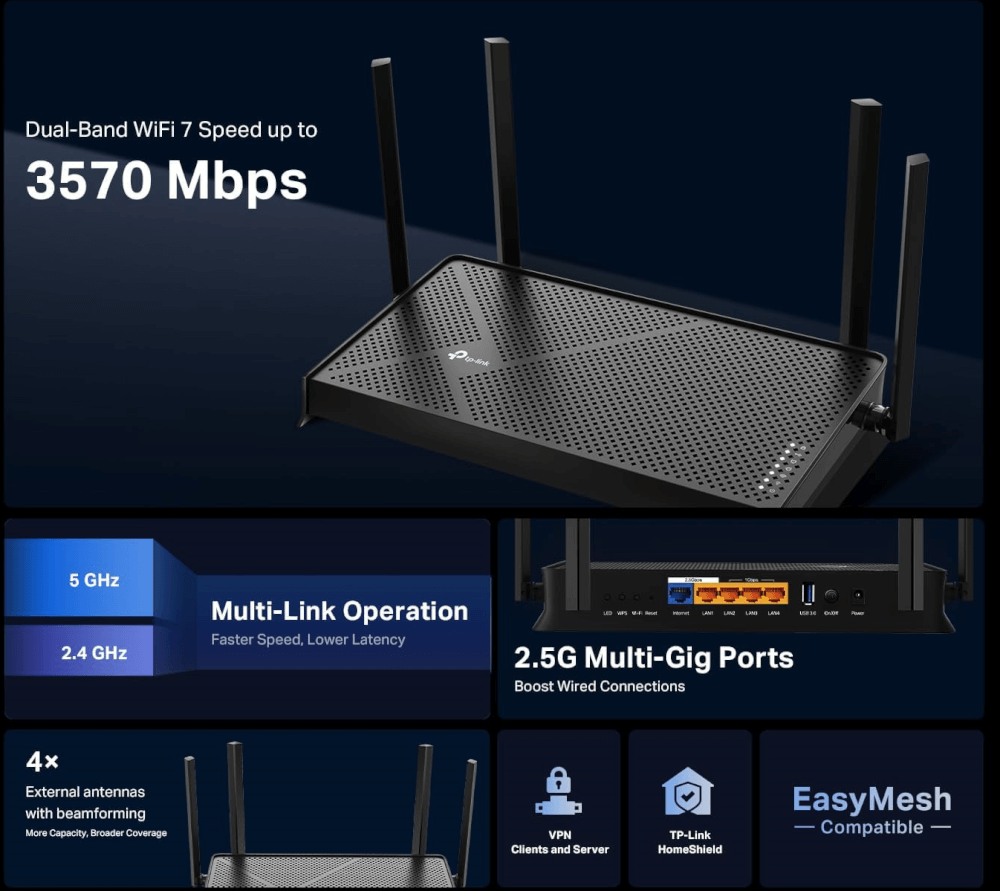
Another breakthrough is Multi-Link Operation (MLO). This lets devices transmit and receive data over multiple bands at the same time. As a result, network stability and speed increase even in crowded environments. You can read more about these technical advancements on Qualcomm’s Wi-Fi 7 overview.
Speed and Latency: A Big Step Forward
Wi-Fi 7 is expected to deliver speeds of up to 46 Gbps. That is more than four times faster than Wi-Fi 6. It achieves this by combining 320 MHz channels with 4K QAM modulation.
Lower latency is another standout benefit. Gamers and remote workers will experience near real-time responsiveness. This also means smoother 4K and 8K video streaming. Even heavy video conferencing will become more efficient. For a technical comparison of Wi-Fi generations, check Intel’s detailed breakdown.

Benefits for Smart Homes and IoT Devices
Wi-Fi 7 supports more simultaneous device connections without loss of performance. This is perfect for smart homes filled with IoT devices. Your smart TV, doorbell, fridge, and thermostat can work seamlessly together.
It also enhances reliability for real-time applications. Imagine controlling smart devices with zero delay. With Wi-Fi 7, that becomes possible. The added spectrum efficiency helps reduce signal interference. For an overview of smart home trends, CNET offers a helpful guide.
Enterprise Applications and Industrial Potential
Businesses with high connectivity needs will benefit greatly from Wi-Fi 7. Offices, warehouses, and factories require stable and fast networks to operate efficiently. Wi-Fi 7 meets these demands with ease.
It is ideal for augmented reality (AR), virtual reality (VR), and cloud-based tools. These applications demand massive bandwidth and minimal delay. Wi-Fi 7 delivers both. Read how Cisco sees Wi-Fi 7 as a driver of enterprise transformation.
Device Compatibility and Market Rollout
You might be wondering: Will my current devices work with Wi-Fi 7? Unfortunately, no. You will need compatible routers and devices. However, many manufacturers are preparing product launches. These include TP-Link’s upcoming Wi-Fi 7 routers, already announced for mid-2025.
That said, Wi-Fi 7 is backward compatible with Wi-Fi 6 and earlier devices. So upgrading your router will still benefit your network even if your gadgets are not yet updated.
Security and Power Efficiency Enhancements
Wi-Fi 7 is expected to build on WPA3, offering better security protocols. These will provide added protection from cyber threats. It will be especially useful in public and enterprise networks.
Additionally, Wi-Fi 7 improves power efficiency. It reduces battery drain on mobile and IoT devices. This is possible through intelligent scheduling and resource management features embedded in the new standard.
Should You Upgrade Now or Wait?
Early adopters may find benefits in upgrading once Wi-Fi 7 routers become available. However, mainstream adoption might take until late 2025. Prices will drop, and more devices will support it by then.
If you rely on fast, stable internet for work or entertainment, upgrading sooner could be worth it. On the other hand, casual users may wait until Wi-Fi 7 becomes the new standard.
Final Thoughts
Wi-Fi 7 promises faster speeds, lower latency, and improved efficiency. It is not just for tech enthusiasts—it benefits all users. Whether at home, work, or in smart cities, the impact of Wi-Fi 7 will be substantial.
Its official rollout is still in progress, but the potential is clear. The leap from Wi-Fi 6 to Wi-Fi 7 is bigger than ever. So, if you want to future-proof your digital life, Wi-Fi 7 is the way to go.