Posts in AI

Speeding Up Your World: The Rise of Edge Computing Hardware

Imagine a world where your devices react instantly. They anticipate your needs without delay. This isn’t science fiction. It is the reality of 2026. This change is due to edge computing hardware, which processes data right where it’s generated. You can learn more about these foundational edge computing concepts to understand the shift. Traditional data centers, while massive, possess inherent limitations. Consequently, your data travels long distances. This creates perceptible lags. Such latency frustrates users. Therefore, edge-ready hardware brings computation closer to you. It solves these critical problems efficiently. Leading… Read More

Cybersecurity in the AI Era: Defending Digital Assets Against Intelligent Threats

Cybersecurity has entered a new phase shaped by artificial intelligence advancements. Organizations now face threats that learn, adapt, and scale rapidly. As a result, traditional security models struggle to keep pace. In 2026, cybersecurity in the AI era and AI-powered cybersecurity dominate security strategies. Attackers increasingly weaponize AI to automate phishing and exploit discovery. Therefore, defenders must respond with equally intelligent systems. Moreover, expanding cloud adoption and remote work increase attack surfaces. Consequently, security teams prioritize resilience, automation, and real-time response. This article examines emerging threats, modern defenses, and proven… Read More

Autonomous Vehicles in 2026: Where Self-Driving Technology Is Headed Next

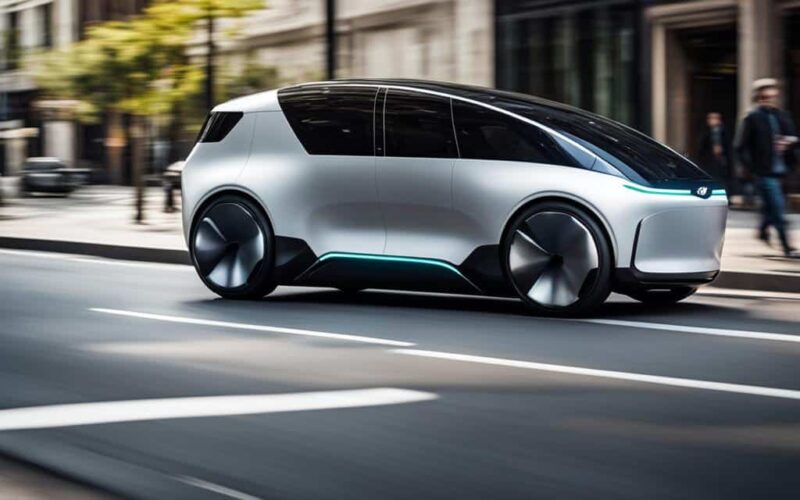
Autonomous vehicles continue reshaping the global transportation landscape in 2026. What once felt experimental now enters structured, real-world deployment phases. As a result, governments, manufacturers, and consumers closely watch every advancement. Today, autonomous vehicles 2026 development focuses on safety, scalability, and regulation. At the same time, self-driving car technology improves through better sensors and AI models. Therefore, autonomy feels more reliable and commercially viable. Moreover, urban congestion, labor shortages, and sustainability concerns accelerate adoption. Consequently, autonomous mobility solutions attract massive investment worldwide. This article explores key trends, challenges, and opportunities… Read More

AI-Integrated Wearables: How Intelligent Devices Are Redefining Personal Technology

AI-integrated wearables are rapidly transforming how people interact with technology daily. These devices now combine advanced sensors with real-time artificial intelligence processing. As a result, wearables feel more intuitive, responsive, and personalized than ever before. In particular, AI-integrated wearables and smart wearable technology now extend beyond fitness tracking. They actively analyze behavior, health patterns, and environmental data continuously. Therefore, users receive insights instead of raw numbers. Moreover, growing consumer demand drives innovation across health, productivity, and lifestyle use cases. Manufacturers also focus on smaller designs with stronger computing power. Consequently,… Read More

CES 2026 Consumer Tech Breakthroughs: AI, Robotics, and Wearables Redefine Everyday Life

CES 2026 showcased a powerful shift in how consumer technology integrates into daily life. This year, innovation focused on intelligence, autonomy, and human-centered design. As a result, technology felt more personal, adaptive, and purpose-driven than ever before. Notably, CES 2026 consumer tech trends emphasized practical applications over futuristic concepts. Meanwhile, AI-powered consumer devices dominated product launches and keynote demonstrations. Therefore, consumers can expect smarter, more intuitive technology entering the market rapidly. Additionally, manufacturers focused on affordability, energy efficiency, and seamless ecosystem integration. Consequently, adoption barriers continue to decrease for mainstream… Read More

Enterprise AI in 2026: Real-World Use Cases Driving Measurable ROI

Enterprise AI in 2026 has moved far beyond experimentation and isolated pilots. Today, organizations deploy AI systems to solve concrete business problems at scale. As a result, executives now demand measurable outcomes, not theoretical potential. Moreover, advances in enterprise artificial intelligence platforms have reduced deployment complexity. Cloud infrastructure, pre-trained models, and low-code tools accelerate adoption across industries. Consequently, AI has become a core operational asset rather than a research initiative. At the same time, AI-driven business transformation pressures companies to modernize workflows. Firms that delay adoption increasingly lose efficiency, insight,… Read More

How to Use Microsoft Excel AI Tools to Automate Your Spreadsheets in 2025

Microsoft Excel remains one of the most powerful tools for data analysis, reporting, and business automation. In 2025, it becomes even more efficient with integrated AI-powered Excel features. Whether you’re a beginner or a pro, these tools help you automate tasks, visualize data, and save valuable time. Today, Excel uses artificial intelligence not just to suggest formulas but also to organize, interpret, and analyze large data sets. With functions like Ideas in Excel and Copilot in Microsoft 365, users can now interact with data using natural language, automating processes that… Read More

How to Use AI Tools to Supercharge Your Productivity on PC in 2025

Artificial Intelligence (AI) is no longer just a buzzword—it’s your daily productivity booster. In 2025, AI-powered apps have become vital for digital productivity. Whether you’re writing emails, automating tasks, or organizing your day, AI tools on your PC can save hours each week. Today’s AI tools are more user-friendly and effective than ever. With just a few clicks, you can analyze data, summarize articles, or streamline work processes. In this post, we’ll explore how to use AI productivity tools efficiently on your computer. You’ll discover smart applications for writing, time… Read More

AI in Government: Transforming Public Services for the Digital Age

Artificial Intelligence (AI) is redefining how public institutions serve citizens. From healthcare to transportation, governments are adopting smart technologies. This transformation enhances efficiency and transparency while reducing operational costs. As a result, AI in the public sector is now a global trend. With increasing demand for digital transformation and government innovation, AI offers timely and powerful solutions. Public agencies are integrating intelligent tools to improve service delivery and responsiveness. As more nations adopt AI, this evolution is becoming a cornerstone of modern governance. AI-Driven Citizen Services: Improving Access and Efficiency… Read More

AI in IT: Revolution or Risk? Exploring the Automation Wave

Artificial Intelligence (AI) is revolutionizing the Information Technology (IT) industry. It is no longer just a futuristic concept. Today, AI automation and machine learning in IT are transforming how companies operate, diagnose issues, and manage infrastructure. As a result, IT departments are evolving. They are becoming more efficient and cost-effective. However, with these benefits come risks, ethical concerns, and job market shifts. This article will explore the good, the bad, and the brilliant sides of AI automating IT. The Good: Efficiency, Accuracy, and Productivity AI brings remarkable advantages to IT… Read More